literature

The Divan of Hafez

DIVAN OF HAFEEZ

Translation & Introduction Paul Smith This is a completely revised one volume edition of the only modern, poetic version of Hafeez's masterpiece of 791 ghazals, masnavis, ruba'is and other poems/songs. The spiritual and historical and human content is here in understandable, beautiful poetry: the correct rhyme-structure has been achieved, without intruding, in readable English. In the Introduction of 70 pages his wonderful life story is told in greater detail than anywhere else; his spirituality is explored, his influence on the life, poetry and art of the East and the West, the form and function of his poetry, and the use of his book as a worldly guide and spiritual oracle.

His Divan, like the I Ching, is one of the world's Great Oracles. Included are notes to most poems, a glossary and a selected bibliography and two indexes. First published in a limited two-volume limited edition in 1986 the book quickly went out of print. Large Format Edition 7" x 10" 656 pages.Goethe: "In his poetry Hafeez inscribed undeniable truth indelibly! He has no peer!"Gertrude Bell: "It is as if his mental Eye, endowed with wonderful acuteness of vision, had penetrated into those provinces of thought which we of a later age were destined to inhabit."Meher Baba: "There is no equal to Hafeez in poetry. He was a Perfect Master ... His Divan is the best book in the world because it engenders feelings which ultimately lead to illumination." COMMENTS ON PAUL SMITH'S TRANSLATION OF HAFEEZ'S 'DIVAN'."It is not a joke... the English version of ALL the ghazals of Hafeez is a great feat and of paramount importance. I am astonished.." Dr. Mir Mohammad Taghavi (Dr. of Literature) Tehran."Superb translations. 99% Hafiz 1% Paul Smith." Ali Akbar Shapurzman, translator of English to Persian and knower of Hafiz's Divan off by heart. "Smith has probably put together the greatest collection of literary facts and history concerning Hafiz." Daniel Ladinsky (Penguin Books author). Paul Smith (b. 1945) is a poet, author and translator of many books of Sufi poets of Persian, Arabic, Urdu, Turkish and other languages including Hafeez, Sadi, Nizami, Rumi, 'Attar, Sana'i, Jahan Khatun, Obeyd Zakani, Mu'in ud-din Chishti, Amir Khusrau, Nesimi, Kabir, Anvari, Ansari, Jami, Khayyam, Hallaj, .Rudaki, Yunus Emre Ghalib, Iqbal, Makhfi, Lalla Ded, Abu Nuwas, Jigar, Seemab and many others, as well as his own poetry, fiction, plays, biographies, kids books and a dozen screenplays

literature

Divan-i Shams-i Tabrizi

Divan-i Kebir, also known as Divan i Shams, is a collection of poems written by the Persian poet and Sufi mystic Mawlānā Jalāl-ad-Dīn Muhammad Balkhī, also known as Rumi. A compilation of lyric poems written in the Persian language, it contains more than 40,000 verses and over 3,000 ghazals.[2] While following the long tradition of Sufi poetry as well as the traditional metrical conventions of ghazals, the poems in the Divan showcase Rumi’s unique, trance-like poetic style. Written in the aftermath of the disappearance of Rumi’s beloved spiritual teacher, Shams-i Tabrizi, the Divan is dedicated to Shams and contains many verses praising him and lamenting his disappearance. Although not a didactic work, the Divan still explores deep philosophical themes, particularly those of love and longing.


literature

Persian poetry

Persian poetry is one of the dual types of speech and is opposite to prose. Poetry is considered as a thoughtful speech with metre and sometimes rhyme as a composition of words in which a kind of metre is used.

Persian poetry has different types:

Ancient Persian poetry is divided into the following types in terms of structure and ordering tools:

  1. couplet,  2.ode,  3.sonnet,  ـ4.stanza,  5.Composition-tie,  6.strophe , 7.tail-rhyme ,  8.Quartet,  9.terzarima and 10.distichs, and in terms of intentions to different types such as praise 's syllable, pride, epic, elegy, love song, destruction and other than them are divided. There are other divisions in Persian literature for poetry, such as song, ballad, hymn, chant, chakameh, elegiac, inspiration, proverb and sayings.


The poets of classical poetry are Saadi, Ferdowsi, Hafez, Khayyam, Rumi and dozens of other famous poets. In the contemporary period, founded by Nima Yoshij, Persian poetry became known as New Poetry with slight changes in metre and rhyme. Poets such as Tavalli, Ebtehaj, Akhavan Sales, Sohrab Sepehri and many others are among the poets of this style of poetry.

The period after the Islamic Revolution, Persian poetry also entered a new phase. One of the features of the poetry of this period is dealing with new dimensions of religion, self-sacrifice, martyrdom and similar things. The most important difference between the poetry of this period and the previous period is the use of old Persian formats, although some of the young poets of the revolution wrote their best poems in the form of new poetry. One of the achievements of the Islamic Revolution of Iran in the field of literature, especially poetry, is a development that includes the semantic aspects of poetry. Poetry was influenced as a mirror of the developments in the country after the victory of the Islamic Revolution of Iran. Poetry during the decades after the Islamic Revolution, played a significant role in reflecting events and expressing social conditions, and this development is significant compared to before the Islamic Revolution of Iran. Among the famous figures of poetry of this period, we can name: Ali Moallem, Ahmad Azizi, Qaisar Aminpour, Hossein Manzavi, Tahereh Saffarzadeh and Fatemeh Rakaei.

literature

Saadi Shirazi Persian Kalam

Prominent Persian poet from Iran, famous for his prose in Gulistan and verse in Bustan.

Profile Of Saadi Shirazi

Pen Name :'Sadi'

Real Name :Abu Muhammad Muslehuddin

Born :Shiraz

Died :Shiraz, Iran


Abu Muhammad Muslihuddin bin Abdullah Shirazi, better known by his pen name Saa'di, was a Persian poet famous for his works Bustan and Gulistan. His travels included countries like Arab, North Africa, Asia Minor, Syria and Hindustan. Having reached Sindh, he met many revered Sufis. In Baghdad, he met Sheikh Shahabuddin Suhrawardy. Although he also has many other works credited to his name, his fame largely rests upon Bustan and Gulistan. In Gulistan he has expressed his experiences by describing religious principles while there is a glimpse of Sufism in Bustan. The uniqueness of his expression is the ease and simplicity of his language. He has penned poems on a gamut of subjects. He returned under to Shiraz the rule of Abu Bakr Saad while traveling to distant lands and countries and teaching humanity to the people. After that, he became a recluse after years of arithmetic and fighting. He then presented his lifelong experiences and observations to the world in the form of Gulistan and Bostan. Both of his books have the status of Shehra Afaq. The flowers of Gulistan's poems in particular are still fresh today. Bostan is the name of his collection of poems. Gulistan's prose texts are adorned with the best poems. Sheikh Saa'di's stories are full of counsel. He died in Shiraz in 1292 and was buried there.

literature

Cultural Dialogue VOL 1 (first Edition: August-October 2020)

Cultural Dialogue VOL 1 -first Edition: August-October 2020) English Quarterly Dialogue on Indo- Iran Cultural Relation

Cultural Dialogue VOL 1 -first Edition: August-October 2020) English Quarterly Dialogue on Indo- Iran Cultural Relation


first Edition: August-October 2020


From Chief Editor's Desk
Dr. Mohammad ALi Rabbani


. Contents


Message
Ali Chegeni


Iran and India in an Era of Globalizaion
M. Hamid Ansari


Culture - Foundation for forming lasting Indo-Iranian Relations based on mutual trust and peace
Dr. Mohd. Ali Rabbani


The contribution of Persian language and its Intellectuals to the World Civilization
Dr. Reza Mostafavi Sabzvari


Dialogue Among Civilizations : India and Iran
Prof. Mushirul Hasan


Indo-Persian Literature A Tapestry of Indo-Iranian Hues – Representing a Composite Cultural Identity
Prof. Azarmi Dukht Safavi


Indo-Iranian Cultural Relations Since 1947
R.M. Chopra


India - Iran Cultural Ties: A Re-Appraisal
Prof. Syed Ali Nadeem Rezavi


Compatibility of Cultures and Convergence of Approaches in India and Iran
Prof. Abhay Kumar Singh


The similarities between Sikh and Persian Architecture
Prof. Amargeet Chandok


Tagore Response to Iranian Culture


Indo-Iran Relations through Shahnameh
Prof. Sharif. H. Qasemi


Cross Cultural Relation between India and Iran
Prof. Syeda Khursheed Fatima Husaini

/uploads/1/2022/Sep/29/16.pdf

literature

Cultural Dialogue - Vol. 2 English Quarterly Journal on Spiritually and Mysticism

Cultural Dialogue - Vol. 2 English Quarterly Journal on Spiritually and Mysticism Published by Iran Culture House New Delhi in cooperation with Allameh abatabai University Iran & Univeristy of Lucknow

Cultural Dialogue - Vol. 2 English Quarterly Journal on Spiritually and Mysticism Published by Iran Culture House New Delhi in cooperation with Allameh abatabai University Iran & Univeristy of Lucknow


Second Edition: November 2020-January 2021

From Chief Editor's Desk
Dr. Mohammad ALi Rabbani

Contents

Forward
Prof. S.R. Bhatt

Interfaith Dialogue based on Mystical Bonds
Prof. Hakimifar Khalil

Rumi and Confluence of Indian and Islamic Spiritualism
Dr. Balram Shukla

Peacful co-existance and Spirituality in Islam with special reference to Indian and Iranian Sufis
Prof. Hamidullah Marazi

Rumi's Tasawwuf and Vedantic Mysticism
R.M. Chopra

Religious and Cultural Relationships between Indian Parsis and Iranian Zoroastrians
Prof. Reza Mehrafarin,Malika Haidari

The Migrant Sufis from Persianate World to the Indian Sub-continent : Dissemination of knowledge and the formation of Indo-Islamic Culture
Prof. S.Z.H Jafari

Sufis and Communal Harmony: A case of Study of Indian Sufis
Prof. S.M. Azizuddin Husian

Sufi Mysticism and Indian Religion
Prof. K.T.S. Sarao

Understanding Spirituality in Indian Context
Prof. S.R. Bhatt

http://www.ichdpublication.in/cul2/cul2.html

literature

Cultural Dialogue - Vol. 3 English Quarterly Journal

Cultural Dialogue - Vol. 3 English Quarterly Journal Published by Iran Culture House New Delhi in cooperation with Allameh abatabai University Iran & Jawaharlal Nehru University (JNU) New Delhi

Cultural Dialogue - Vol. 3 English Quarterly Journal Published by Iran Culture House New Delhi in cooperation with Allameh abatabai University Iran & Jawaharlal Nehru University (JNU) New Delhi


Third Edition: January-May 2022

From Chief Editor's Desk
Dr. Mohammad ALi Rabbani

Post 1979 Iranian Cinema and Post-1947 Indian Cinema: Responses to Changing Times
zulfikar Ali Ansari

Persian Language and the Decline of Indo-Persian Knowledge Tradition:Significance,Perception & Revisit
Akhlaque Ahmad ‘Ahan’

PRESENCE OF PERSIAN MERCHANTS IN GUJARAT SOME INSCRIPTIONAL EVIDENCES
Abha Singh

Tangible Intersections of India & Iran: The Meherjirana Library
Shernaz Cama

Re-birth of Cultural Values in International Relations; Islam and the Asian Perspective
Karim Douglas Crow

A Study on the Impact of the Tourism Industry on India’s Economy, with a Look at Iran-India Tourism relation
Soha Norouzi

http://www.ichdpublication.in/cul3/cul3.html

literature

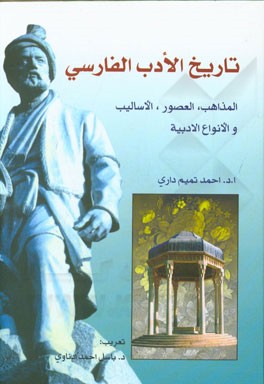
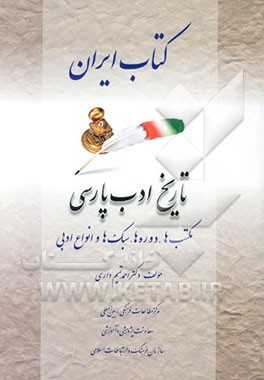
History of Persian Literature , politicization of the history of Persian literature

So far, many studies have been conducted on the rich Persian culture and literature, among which History of Persian Literature is one of the most prominent.

Ahmad Tamimdari: From Mathematics to Persian Literature

The fact that Ahmad Tamimdari, now a Full Professor of Persian Language and Literature at Allameh Tabataba'i University, began his academic journey in mathematics is one of the remarkable ironies of modern Iranian education. Among Iranian students, the highest-achieving pupils have traditionally been encouraged to pursue mathematics and the natural sciences. As Tamimdari observes, this approach has often implied that society values little beyond doctors and engineers. He traces the roots of this mindset to the establishment of Dar al-Fonun, where academic streams were largely determined by grades: top-performing students were directed toward mathematics, average students toward the natural sciences, and weaker students toward the humanities.

Despite beginning in mathematics, Tamimdari changed direction upon entering university and pursued social sciences and sociology. His academic journey at the University of Tehran lasted eleven years. After completing his undergraduate studies, he enrolled in the Higher School of Literature and later returned to the University of Tehran to study Persian Language and Literature. This path ultimately transformed him into one of Iran’s most respected literary scholars, linguists, and researchers of Persian culture.

History of Persian Literature

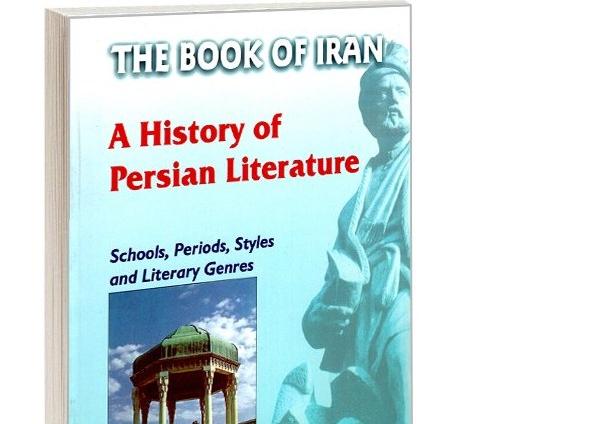
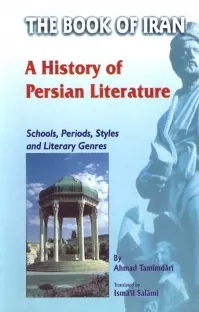
History of Persian Literature: Schools, Periods, Styles, and Literary Genres is widely regarded as Ahmad Tamimdari’s most important and influential work. In this book, Tamimdari examines Persian literary history through the framework of literary schools, styles, and genres. Rather than organizing literary history according to political dynasties, he presents it through the intellectual and cultural movements that shaped Persian literature. The result is a clear, systematic, and accessible survey of Persian literary development. The book classifies Persian poetry into several major stylistic periods, including: Khorasani Style, Transitional (Middle) Style, Iraqi Style, Voqouʿ (Occurrence) Style, Indian Style, Bazgasht-e Adabi (Literary Return) Style, Constitutional Style,  Contemporary Style, Persian prose is similarly divided into six major periods, each examined independently and in detail.

Tamimdari argues that philosophical and theological schools of thought provide the intellectual foundation of culture and serve as the sustaining force behind literary creativity. His attention to these underlying intellectual traditions distinguishes the book from many earlier literary histories. The work has also been published in English and serves as a valuable reference for international scholars and students of Persian literature.

A New Approach to Literary History

Scholars regard the compilation of a comprehensive history of Persian literature as an exceptionally demanding task. The field encompasses more than three thousand years of cultural and literary heritage, requiring extensive research, theoretical planning, travel, interviews, and consultation with specialists. For this project, Tamimdari drew upon the writings of both Iranian and non-Iranian scholars and literary figures. One of the book’s most innovative features is its examination of philosophical and theological traditions as cultural foundations for literary works and stylistic developments.

As a result, History of Persian Literature has become an important reference source in the field. Tamimdari devoted an entire year to preparing the volume. He attributes its success not only to the comprehensive collection and organization of materials but also to its deliberate avoidance of political controversies. Before the publication of this work, Persian literary and cultural history was often presented primarily through the lens of political dynasties. Tamimdari shifted attention toward literary movements, intellectual traditions, and cultural developments, offering a richer and more nuanced understanding of Persian literary history.

Executive Activities and Academic Service

In addition to his scholarly work, Ahmad Tamimdari has held numerous academic and administrative positions. His professional responsibilities have included:

  • Faculty member, Faculty of Persian Language and Literature, Allameh Tabataba'i University
  • Director, Persian Studies Center, Allameh Tabataba'i University
  • Director, Iran–Pakistan Persian Research Center
  • Vice Chancellor for Cultural Affairs, Faculty of Persian Language and Literature, Shahid Beheshti University
  • Member of the Council for the Promotion of Persian Language and Literature
  • Editor-in-Chief of the biannual journal Sokhan-e Eshgh (The Voice of Love)

Tamimdari joined Iran’s Ministry of Education in 1974, where he taught mathematics, Persian literature, and Arabic. He studied under several distinguished scholars, including Sharif Rezaei, Seyed Ali Shahcheraghi, Seyed Ja'far Shahidi, and Ahmad Mahdavi Damghani.

Major Publications and Translations

Among Tamimdari’s notable books are: Mysticism and Literature in the Safavid Era, Iranian Stories,  Folklore, An Ode to Shi‘a Beliefs. He has also translated several important scholarly works, including: An Introduction to Literature, Criticism and Theory (Andrew Bennett), The Scope of Persian Poetry in England and America, The Organizations of the Islamic Empire. In addition, a collection of his essays has been published under the title Jor'eh-ye Jam (A Sip from the Chalice).

Persian Literature as a Cultural Bridge

In recent years, Tamimdari’s intellectual focus has increasingly centered on Iranian literature and cultural identity. He believes that the various regional forms and dialects of Iranian literature—including Gilaki, Mazandarani, Balochi, Luri, Kurdish, and others—deserve formal recognition and instruction within university literature departments. He has also emphasized the need to establish centers for the study of both Western and Eastern languages, arguing that such institutions are essential for strengthening cultural dialogue and mutual understanding.

According to Tamimdari, culture constitutes one of the greatest strengths of the Islamic Republic of Iran. While religious differences may sometimes make consensus difficult, cultural commonalities provide a powerful basis for unity and cooperation. He argues that language and literature can serve as bridges between peoples and nations. Tamimdari further stresses the importance of expanding cultural and literary exchanges among regional countries. Such initiatives, he believes, can foster friendship, strengthen regional ties, and promote mutual understanding. He warns that if Iran fails to invest adequately in the study and preservation of its literary heritage, foreign institutions may eventually assume that role and interpret these traditions according to their own interests and priorities.


literature

Analytical History of Islam: An Analytical Look at Early Islamic History with a Critical Approach

History is a subject in whose analysis impartiality comes first, a perspective that has been well implemented in Analytical History of Islam.

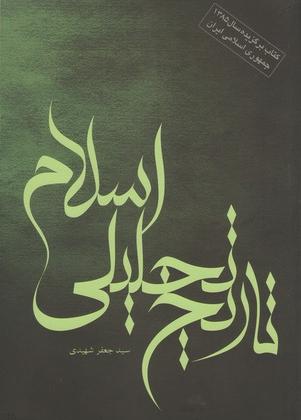
The book Analytical History of Islam provides a descriptive overview and analytical study of the history of early Islam, spanning from the advent of Islam to the first half of the fourth century AH. The author of this book, Seyed Jafar Shahidi, is regarded as one of the most prominent researchers of the Persian language and Islamic history. Scholars in this field consider him the founder of a new school of thought in documenting Islamic history. The late Professor Shahidi began his academic journey with religious studies. In his youth, he studied at the Islamic seminaries of Qom and Najaf, where he was a student of renowned grand ayatollahs such as Ayatollah Borujerdi and Ayatollah Khoei. Later, as a professor at the Faculty of Literature and Human Sciences at the University of Tehran, he advanced his academic career by learning from legendary masters such as Ali-Akbar Dehkhoda and Badiozzaman Forouzanfar. Notably, the late Shahidi’s masterful translation of the Nahj al-Balagha won the Islamic Republic of Iran's Book of the Year Award in 1990.

The Methodology and Scope of "Analytical History of Islam"

Analytical History of Islam is a seminal work that investigates the social and political prerequisites surrounding the advent of Islam. The book offers a comprehensive, analytical account of the life of the Prophet Muhammad (PBUH), his successors, the socio-economic conditions of Muslims, and the major events and transformations within Islamic society from its origins up to the first half of the fourth century AH. Rather than merely chronicling historical events and shifts, the author draws upon credible historical sources to evaluate them through an analytical lens, uncovering the underlying causes of these historical transformations. Written with a sharp, critical perspective, Analytical History of Islam actively challenges and deconstructs widespread yet inaccurate historical myths and misconceptions.

In this book, the author posits that a significant portion of early Islamic historical writings is not actual history, but rather the written recording of folk tales and legends. He categorizes the narrators of certain events—particularly those recounting the early Islamic conquests—as storytellers rather than historians. For instance, he views certain accounts regarding Abd al-Rahman ibn Muljam’s motives for assassinating Imam Ali (AS) as the product of storytellers' fabrications, openly questioning the famous narrative surrounding his infatuation with Quttam. Reflecting its enduring academic significance, the book reached its 44th printing edition in 2019.

A Chapter-by-Chapter Overview

Published by the University Publication Center (Markaz-e Nashr-e Daneshgahi) in 1983, Analytical History of Islam is structured into eight distinct chapters: Chapter 1: Examines the geographical location of the Arabian Peninsula alongside its socio-political conditions prior to the advent of Islam. Chapter 2: Dedicated to the rise of Islam, covering the appointment (Bi'tha) of Prophet Muhammad (PBUH), the conversion of his close associates, the opposition of the pagans, the migration (Hijrah) to Medina, and the changing of the Qibla from Jerusalem to Mecca. Chapter 3: Explores the military campaigns and battles of the Prophet (PBUH) against the polytheists, chronicling major developments up until his passing. Chapter 4: Provides an in-depth study and analysis of the issue of the Caliphate following the Prophet's death. Chapter 5: Deals with the socio-political situation of the Islamic realm after the martyrdom of Imam Ali (AS). Chapters 6 and 7: Review the rise of the Umayyad and Marwanid dynasties and the sweeping historical transformations of those eras. Chapter 8: The final chapter concludes the work by analyzing the downfall of the Umayyads and the subsequent rise of the Abbasid Caliphate to power. International Recognition: The book has also been translated into German by Hela Kamalian under the title Analysierte Islamische Geschichte.

Other Lasting Legacies

The late Seyed Jafar Shahidi’s Persian translation of the Nahj al-Balagha stands out as one of his most enduring and monumental works. What sets his translation apart from others—beyond its accuracy, faithfulness, precision, and meticulous word-for-word alignment between Arabic and Persian—is his profound reverence for the literary features of this immortal text. Shahidi skillfully integrated rhetorical devices and literary embellishments, such as metaphors, similes, wordplay (jinas), parallelism (mowazaneh), literary harmony (mora'at-e nazir), and particularly rhymed prose (saj'). He preserved these elements in the Persian rendering as much as humanly possible, yet he never allowed semantic meaning to be sacrificed for the sake of verbal decoration. This eloquent translation and fluid commentary earned widespread acclaim from scholars and general readers alike.

Another landmark publication by Seyed Jafar Shahidi is the book Mahdaviyat and Islam (Messianism and Islam). In this work, Shahidi actively refuted the theories of Ahmed Kasravi, systematically addressing Kasravi's severe critiques of Shi'ism and Islam. These comprehensive responses have been made available to interested readers in his book titled The Crimes of History (Jenayat-e Tarikh).

A Lasting Legacy Among Immortal Figures

Dr. Seyed Jafar Shahidi passed away on Sunday, January 13, 2008 (23 Dey 1386 SH). Throughout his illustrious career, he was awarded an honorary doctorate from Peking University. In 1995, during his lifetime, Dr. Shahidi received the highest prestigious first-class scientific medal of honor from the President of the Islamic Republic of Iran.  

literature

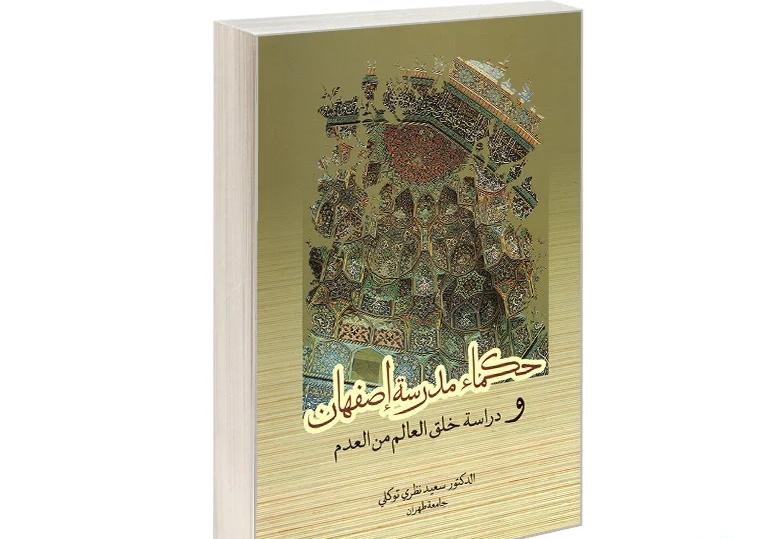
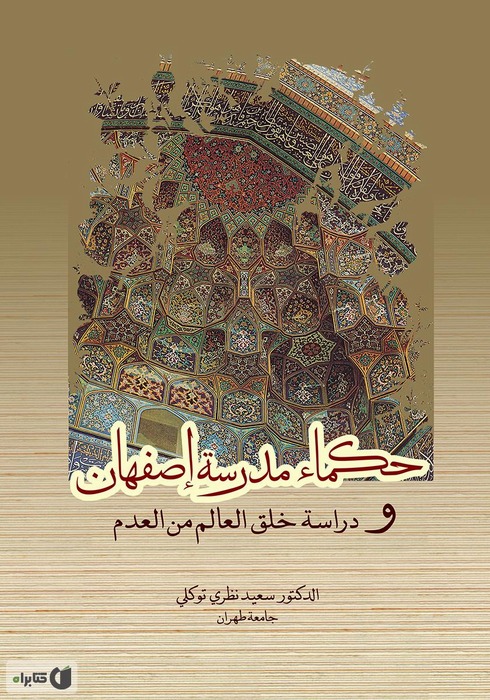
Sages of the Isfahan School and the Issue of the Origin of the World, an examination of the Isfahan School philosophers view

The book Sages of the Isfahan School and a Study of the Creation of the World ex Nihilo is one of Dr. Nazari Tavakkoli’s well known books.

Dr. Saeid Nazari Tavakoli is a Full Professor at the Faculty of Theology and Islamic Studies at the University of Tehran. He is regarded as one of the distinguished students of Grand Ayatollah Mirza Ali-Aqa Falsafi. Among Dr. Nazari Tavakoli's most acclaimed works is the book Hukama' Madrase Isfahan wa Dirasat Khalq al-Alam men al-Adam (The Sages of the School of Isfahan and the Study of Creation ex Nihilo / Creation of the World from Nothingness). Published in Arabic, this book explores the origin of the universe—a highly contentious issue in both religious and philosophical texts that has long challenged and engaged thinkers across philosophy and theology (Kalam). Dr. Tavakoli's examination of the universe's origin is deeply informed by the works of the thinkers belonging to the philosophical and intellectual School of Isfahan. Established during the Safavid era, this school produced immensely valuable contributions to Islamic philosophy. However, its flourishment came to a bitter end and fell into obscurity following the occupation of Isfahan by invading Afghan forces.

The Three Main Figures of the School of Isfahan

The establishment of the Islamic Seminary (Hauza) of Isfahan dates back to the Safavid era. This pivotal period witnessed both the declaration of Shi'ism as the official state religion of Iran and the selection of Isfahan as the nation's capital. Philosophy was among the primary sciences that flourished within the Isfahan Seminary, becoming a standard pursuit for its scholars. The presence of monumental figures such as Mirdamad (Seyed al-Falasifa / The Prince of Philosophers), Mirza Abul-Qasim Mir Fendereski, and Sadr al-Din Shirazi (Mulla Sadra)—alongside the seminal texts they authored and the numerous commentaries and glosses written during this era on the works of preceding philosophers—clearly demonstrates the Isfahan Seminary's unique dedication to philosophy. In fact, the Illuminationist (Ishraqi) interpretation of Avicenna's (Ibn Sina) philosophy, which had been initiated earlier by thinkers like Suhrawardi and Ghiyath al-Din Mansur, reached its zenith in Isfahan through the dedicated efforts of masters like Mirdamad and Mulla Sadra, becoming a defining characteristic of Safavid-era philosophy. The grand task of founding the philosophical School of Isfahan was carried out by three renowned figures of philosophy: Mirdamad, Sheikh Bahai, and Mir Fendereski. These three are widely revered as the foundational pillars holding up the tent of this intellectual movement.

The Philosophers of the School of Isfahan

Seyyed Hossein Nasr, the Iranian philosopher and Professor of Islamic Studies at George Washington University in the United States, has published comprehensive research on the philosophical School of Isfahan. In fact, it was Seyyed Hossein Nasr who coined and popularized the term "The School of Isfahan." According to him, the remarkable revival and vitality of Islamic philosophy during the early Safavid period (the 16th century CE)—centered around Mirdamad and his students—is uniquely defined by the works of this school. This intellectual tradition nurtured countless philosophers, the most prominent of whom was Mulla Sadra. Alongside Mulla Sadra, its most celebrated masters were Mirdamad and Mir Fendereski. The tradition was further carried on by Mulla Sadra's own prominent disciples, including: Mulla Mohsen Fayz Kashani, Mulla Rajab Ali Tabrizi, Mulla Shamsa Gilani, Aqa Jamal Khwansari, Seyyed Ahmad Alawi, Qazi Sa'id Qummi.

Mulla Sadra's Philosophical Revolutions

Mulla Sadra developed a groundbreaking philosophical framework known as Hikmat al-Muta'aliyah (Transcendent Theosophy / Transcendent Wisdom). His most vital philosophical innovation was the Primacy of Existence (Asalat al-Wojud), which is considered a revolutionary perspective in Islamic philosophy. According to this view, it is existence (wojud) that constitutes ultimate reality and essence, rather than quiddity or essence (mahiyah). Another major transformation Mulla Sadra introduced to the traditional Aristotelian philosophical system was the concept of Substantial Motion (Harakat-e Jawhari). However, the School of Isfahan was not monolithic; philosophers such as Rajab Ali Tabrizi openly disagreed with the concepts of the primacy of existence and the unity of existence (wahdat al-wojud) that Mulla Sadra had passionately sought to prove through rational philosophy

An Enduring Impact on Philosophy

As Seyyed Hossein Nasr has written, during the late Safavid period (the 17th century CE), an anti-philosophical religious climate led to the decline of the School of Isfahan. From this point onward, philosophical education in Isfahan ground to a halt, and the prominent scholars of this school migrated to other cities. Nevertheless, the intellectual achievements of the School of Isfahan—particularly Hikmat al-Muta'aliyah (Transcendent Theosophy)—left an enduring impact on philosophy in Iran. This ultimately led to a major paradigm shift from Peripatetic (Mashsha'i) philosophy to Sadrian (Sadra'i) philosophy, especially from the 19th century CE onward.

The tradition of teaching philosophy in Isfahan persisted well into the contemporary era, with prominent scholars such as Haj Aqa Rahim Arbab dedicating themselves to the instruction of this discipline. In his Arabic-language book, Hukama' Madrasat Isfahan wa Dirasat Khalq al-Alam min al-Adam, Dr. Nazari Tavakoli likewise seeks to elucidate the profound question of the universe's origin specifically through the lens and writings of the thinkers from this Isfahan intellectual and philosophical school. For readers interested in gaining a deeper understanding of this philosophical movement, a book titled The Philosophical School of Isfahan (Maktab-e Falsafi-ye Isfahan), authored by Seyed Mohammad Ali Modarres Motlaq, serves as an excellent resource. Modarres Motlaq dedicates the first four chapters of the book's first section to the background of the School of Isfahan and the biographies of its primary founders: Mirdamad, Sheikh Bahai, Mir Fendereski, and ultimately, Mulla Rajab Ali Tabrizi. The second section, titled "The Maturation Era of the School of Isfahan," provides a detailed explanation of the intellectual currents surrounding the three main pillars that held up the School of Isfahan.

literature

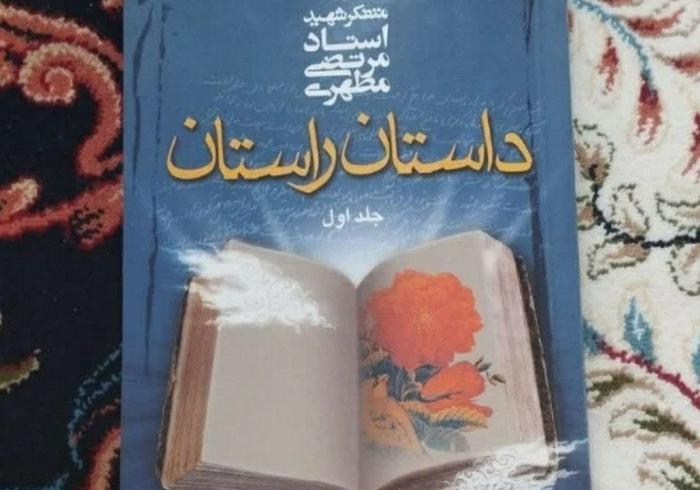
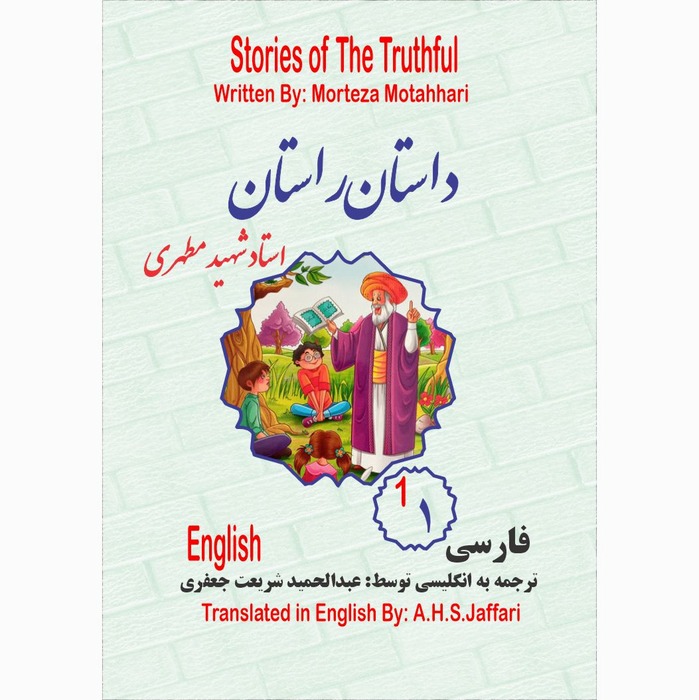
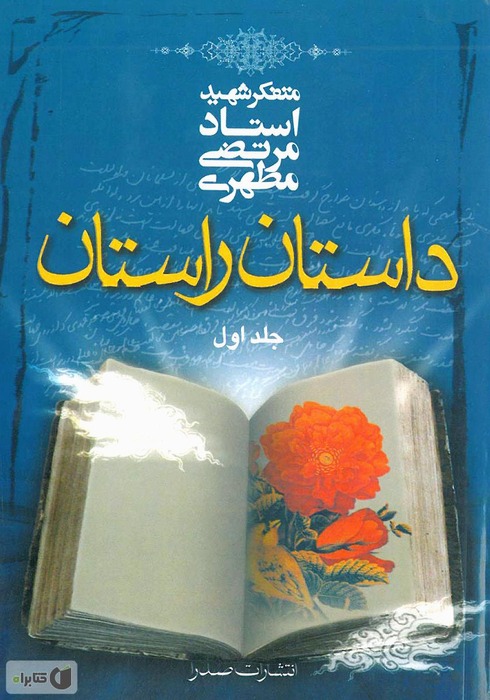
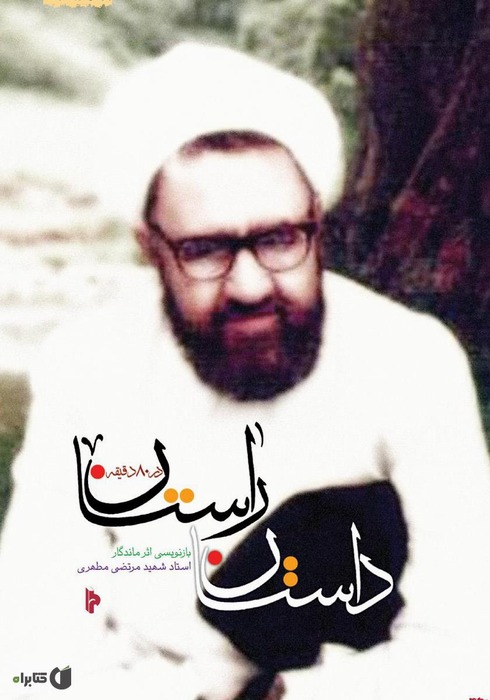
Dastan-e Rastan: A Selection of the Best Edifying Stories

The purpose of compiling Stories of the Righteous is to explain ethical and educational points in simple language for the young generation of society.

Dastan-e Rastan (The Epic of the Righteous) has been published in two volumes. Drawing upon religious and historical texts, Ayatollah Motahhari compiled anecdotes and narratives of events from the early days of Islam for the younger generation of society. The purpose of collecting these stories is to convey moral and educational points in simple language for the youth. In the preface to the first volume, Martyr Motahhari writes: "Until now, no book has been written in which the author, with the purpose of guiding, mentoring, and refining public morals, has extracted useful, true stories from books of history and Hadith to make them accessible to the general public." Dastan-e Rastan is a response to the absence of this approach, written during the 1960s and 1970s (the 1340s and 1350s SH) despite the Pahlavi regime's strict regulations regarding religious matters. The book Dastan-e Rastan tells the stories of those who wish to walk the straight path—individuals referred to in the Holy Qur'an as the Siddiqin (the Truthful).

The First Volume of Dastan-e Rastan

The first volume of Dastan-e Rastan consists of 75 stories. In the footnotes of each page, Ayatollah Motahhari has cited the sources of the stories for the readers' reference. Every effort was made to narrate each story exactly as it was recounted in the original sources and Hadiths. Martyr Motahhari writes: "The author has added nothing to the original story from his own imagination, nor has he omitted anything from it." The stories in the book are written in a fluent and universally understandable style, ensuring that the reader's full cognitive capacity can be engaged in comprehending and reflecting upon the concept and content of the story. Beyond serving as a useful moral and social guide for the youth, the stories in Dastan-e Rastan can act as a serious touchstone for the reader to evaluate the state of Islamic society—comparing what happens in their surrounding environment with what Islamic sources and books have prescribed. By reading Dastan-e Rastan, the reader becomes acquainted with the true spirit of Islamic teachings. They can measure themselves, their environment, and their society against these standards, and see to what extent the meaning and reality of Islam exist in the behavior and speech of people in a society where everyone considers themselves Muslim—and where some, perhaps, claim to champion Islam more than others.

The Stories of the Second Volume of Dastan-e Rastan

The second volume of Dastan-e Rastan contains 50 stories and was published approximately four years after the first volume. Ayatollah Motahhari cited his busy workload as the reason for this delay, while explaining that his decision to write the second volume was driven by the public's warm reception of the first volume. Martyr Motahhari viewed the success of the first volume as a sign that people are ready to listen to and read quality religious material; it simply requires religious writers to take the initiative and present beneficial works to society. The 50 stories in the second volume are longer than those in the first. Furthermore, the narratives in this volume are not limited exclusively to Hadith accounts, as historical texts were also utilized in their compilation.

Highlighting a Common Social Malady

In the preface to the first volume, Martyr Motahhari responds with a serious critique of the mindset that criticized the writing of Dastan-e Rastan due to its simplicity. He writes that if this way of thinking belonged to just one or a few individuals, he would not have written anything about it: "Unfortunately, this mindset—which is nothing but a social malady and a major deviation from the sublime teachings of Islam—has become highly prevalent in our society. It is for this very reason that today we are exceedingly impoverished in terms of useful books, particularly beneficial religious and theological texts. As a result, what is essential and necessary remains unwritten, while redundant and useless materials are continuously authored and published. How beautifully Khwaja Nasir al-Din al-Tusi put it: Alas, all that I have won is meant to be lost / All that I have known is entirely unknowable. I have picked up everything that should have been left behind / And left behind everything that was meant to be gathered."

The Audience of Dastan-e Rastan

As Martyr Motahhari has written, while the stories in this book are also useful for the elite of society, Dastan-e Rastan was primarily written for the general public (the masses). This is because the desire for justice, fairness, and humility before truth and reality still thrives within the general public; if a truth is spoken, they are willing to adapt themselves to it. Martyr Motahhari hopes that by reading and practicing these stories, the general public will pave the way for goodness and public righteousness to spread from the bottom up. The author also demonstrated an open-minded approach in selecting the stories; he did not choose them based solely on Shia heroes and figures. Consequently, upon reading the book, the audience will encounter stories featuring other Islamic figures as well as prominent non-Muslim individuals. Furthermore, the vast majority of the stories in Dastan-e Rastan have a positive theme, with only two or three stories—such as "An Insult" and "The Sword of the Tongue"—focusing on a negative theme. By sharing these particular stories, the author seeks to address and correct a moral weakness through a gentle reminder.

literature

Religious Democracy, an answer to doubts about Iran's political system

The topic of religion and politics has always been a challenge for thinkers. Religious democracy tries to provide an answer to this challenge.

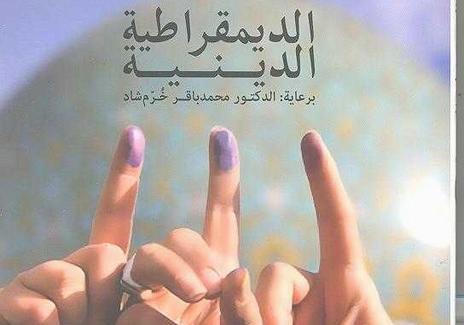
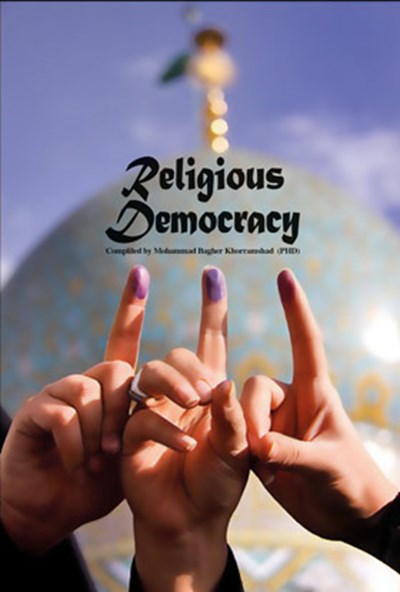
Religious Democracy (Mardom-Salari-ye Dini)

The book "Religious Democracy" (Mardom-Salari-ye Dini), written by Dr. Mohammad-Baqer Khorramshad, comprises seven articles:

  1. Religious Democracy and Theocracy
  2. The Position of Leadership in Religious Democracy and its Comparison with Western Democracy
  3. Religious Democracy and its Critics
  4. Religious Democracy and the Origin of National Sovereignty
  5. Religious Democracy and Secularism
  6. A Look at Religious Democracy from the Perspective of Critiquing Liberal Democracy
  7. Characteristics of Religious Democracy

One of the fundamental points of divergence between the system of religious democracy and Western democratic systems is the concept of leadership. Since religious leadership (Velayat-e Faqih) constitutes the essential pillar of the religious democracy system, the majority of criticisms, doubts, and attacks are directed toward the position of leadership within such a system. In his article "The Position of Leadership in Religious Democracy and its Comparison with Western Democracy," Khorramshad emphasizes the superiority of the non-candidacy method of leadership selection in the Islamic Republic of Iran—which utilizes an assembly of experts and specialists to identify and appoint a qualified individual for leadership—over the methods used to select the highest governmental authority in Western democracies. He attempts to demonstrate and substantiate this superiority through reasoned argumentation.

The Religious Democracy Conference

According to the official website of the Religious Democracy Conference, four editions of this event have been held to date, with the overall objective of proposing the theory of religious democracy as a modern and ideal model for political systems in the Islamic world, examining the existing theoretical and practical challenges and gaps in its theorization, and enriching studies in Islamic political thought to foster a distinct discourse around it. Furthermore, the conference aims to conduct comparative studies between religious democracy and other global models of democracy alongside their theoretical and practical critique, advance futures studies on this democratic system with respect to various Islamic schools of thought and developments across the region, explore the practical frameworks of religious democratic systems in the Islamic world, and address the pathology of the practical experience of this model in Iran to provide functional solutions for resolving these challenges. "Discourse and Dialogue in Religious Democracy" was the title of the inaugural conference, which was held in 2003 at Allameh Tabataba'i University under the scientific secretariat of Dr. Mohammad-Baqer Khorramshad, and its outcomes were subsequently published as a four-volume collection of articles, one of which is this very book, "Religious Democracy."

The Assumptions of Religious Democracy

Dr. Mohammad-Baqer Khoramshad believes that the mere use of the term "religious democracy" presupposes two positions:1- Democracy is acceptable and useful, 2- Religion is acceptable and useful. In other words, it implies that both democracy is inevitable and religion is one of the necessities of individual and social life for contemporary humans. Khoramshad does not consider religious democracy to be a universal concept and proposes it specifically for Iranian society. He believes that religion in Iranian society is of such a nature that it cannot be excluded from the public sphere of people's lives. As evidence, he points to the efforts of Reza Shah and Mohammad Reza Shah, which proved entirely futile. Ultimately, religion becomes the source of a broad public movement that creates a revolution as grand and magnificent as the Islamic Revolution.

According to Dr. Khoramshad, religious theories will not be able to sustain their path without incorporating democracy, and likewise, democracy will have no chance of survival in Iran without taking religious components into account. This is because Islam is inherently social; unlike Christianity, which advocates for the individualization of religion in the relationship between man and God, Islam commands the exact opposite. Khoramshad argues that the hypothesis—which claims liberal democracy was achieved in the Christian geographic realm only when religion was expelled from the public sphere, and that we in Iran have no choice but to marginalize religion to achieve democracy—is fundamentally flawed and stems from a lack of understanding of Iranian society and its people.

Religious Democracy from Khoramshad's Perspective

In 1995, UNESCO published a book titled What is Democracy?, which states that the existence of democracy requires two general principles: "public control over collective decision-making" and "having an equal right to exercise this control."Citing this definition, Khoramshad regards religious democracy as a mechanism in which the people participate in selecting and choosing political leaders and supervise their actions. This supervision is carried out through parliament or certain civil institutions, and particularly by setting term limits for political offices. Under this mechanism, if someone fails to perform properly, they will not be re-elected for a second term. When Dr. Khoramshad refers to "religious democracy," he envisions such a mechanism operating within a religious society and within the framework of religion. He believes that the criteria for selection in a non-religious society are inherently different from those in religious societies.

literature

Conquering Phoenix, A Tribute to a Great Martyr

Phoenix the Conqueror tells the story of a martyred student.

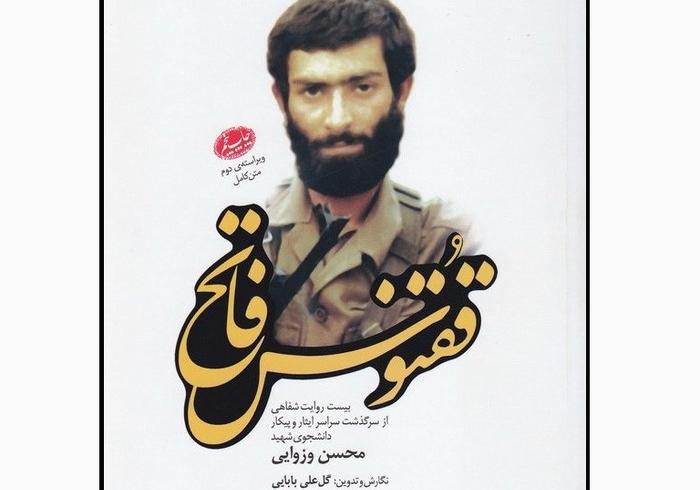
The Conqueror Phoenix (Ghoghnous-e Fateh)

The book "The Conqueror Phoenix" (Ghoghnous-e Fateh) is written by Gol-Ali Babaei. By reading this book, the audience becomes acquainted with the life story of the martyred student, Mohsen Vezvaei. The author has strived to remain strictly faithful to actual events, serving solely as a narrator for: Dozens of pages of memories recorded in the Sacred Defense archives. Hundreds of minutes of audio recordings from military negotiations and wireless radio communications. Surviving documents held by Martyr Vezvaei’s close associates.

Notable Chapter Titles

Some of the titles of the memories compiled in this book include: Dear God, We Have Come, The Conquerors of the Devil's Den,  A Nuptial Chamber in an Alley,  Ahmad, Ahmad, Vezvaei!, The Five-Second Leap, The Enemy Confesses, Sweet Pain, The Artillery of the Fourth Corps, Goodbye, the Fruit of my Heart.  "The Conqueror Phoenix" has been published jointly by Shahed and Fatehan publications in 304 pages.

Who Was Mohsen Vezvaei?

The wartime record of the Martyred Mohsen Vezvaei during the Sacred Defense includes: Command of the Habib ibn Mazahir Battalion, Command of the newly established 10th Mohammad Rasulullah (PBUH) Brigade,  Command of the 10th Seyyed al-Shohada Brigade, Command of the IRGC Communications Battalion, Supervision of Operations Intelligence. In 1978, Martyr Vezvaei achieved the first rank nationwide in Iran's university entrance exam (Konkoor) in the field of Chemistry. During the tumultuous days of the Islamic Revolution in 1979, he shouldered the critical responsibility of guiding revolutionary fighters and played an influential role in the decisive armed clashes of that year. He displayed exceptional courage in the capture of two major military bases in Tehran: Jamshidieh and Eshratabad.

In the early stages of the Iran-Iraq War, Mohsen Vezvaei played an active role in planning the operation to liberate the "Bazi Deraz Heights." He was wounded during this operation and transferred to Tehran. In the hospital, despite being in severe pain, he did not groan. When a doctor expressed amazement at his high pain tolerance, Vezvaei replied: "Doctor! The more pain I endure, the more joy I feel, and I feel that through this, I am drawing closer to my God!"

On April 12, 1982, Martyr Vezvaei entered Operation ela Beit-ol-Moqaddas. To ensure a more effective execution of the operation, it was decided to merge the 10th Seyyed al-Shohada Brigade (under Vezvaei's command) with the Hazrat-e Rasul (PBUH) Brigade. Mohsen Vezvaei was appointed as the commander of the main axis during Operation Beit-ol-Moqaddas. On April 30 of that same year, at the young age of 22, he was martyred due to bullet wounds and shrapnel injuries. Martyr Vezvaei had gone to the war front as a volunteer.

Gol-Ali Babaei and The Conqueror Phoenix

Gol-Ali Babaei explains his reasoning for choosing the title "The Conqueror Phoenix" (Ghoghnous-e Fateh) for the memoirs of Martyr Mohsen Vezvaei: "Like Iran's mythical and legendary bird, the phoenix (Ghoghnous), Martyr Vezvaei approached the brink of martyrdom several times and returned, until he was ultimately martyred during the first operation to liberate Khorramshahr in 1982. I chose the title 'Conqueror' (Fateh) because of his roles in the capture of the U.S. Espionage Den (Embassy) and the victories in the Bazi Deraz and Beit-ol-Moqaddas operations."

The author of the book states that he wrote The Conqueror Phoenix because: "Figures like Martyr Vezvaei, given the specific meaning and definition of sacrifice and martyrdom they pursued in their lives, are the cultural and ideological heritage of this country." Gol-Ali Babaei is one of the prominent authors of the Sacred Defense era. The publication of the book "Along with the Thunderbolt" (Hampay-e Saeqeh) in the year 2000 brought him widespread recognition. Some of the most important works by this author include: From Alvand to Gharaviz (Az Alvand ta Gharaviz), The Spring of 82 (Bahar-e 82), Earthen Overlays (Kalk-ha-ye Khaki), The Ninth Battalion (Gordan-e Nahom), Habib: A New Birth (Habib; Tavallodi Digar), The Message of the Fish (Peygham-e Mahi-ha), From the Lineage of Habib (Az Tabar-e Habib). To date, 38 books by Gol-Ali Babaei have been published in the field of the Iran-Iraq War.
 
Multiple Reprints and Translation

Since its initial publication, the book "The Conqueror Phoenix" has been reprinted 14 times. In its second edition, the book underwent editing, and five new narratives were added to it. Approximately one-third of the final pages of this book are dedicated to the biography, testament, and photographs of the martyred commander, Mohsen Vezvaei, from his time on the Sacred Defense battlefronts. In 2022, The Conqueror Phoenix was translated into English by Mohaddeseh Asadi Movahed. This translation was a collaborative effort between Al-Hoda International Publication and Shahed Publication. The translated book was published in paperback format (Chaharghat/Medium Octavo) across 197 pages. Ms. Asadi Movahed explains her reasons for deciding to translate the book as follows: "I believe that introducing the martyrs on both national and international levels has not received the decent attention it deserves, even though this culture is character-building and deeply impactful. For this reason, it must be given more attention than ever before."

literature

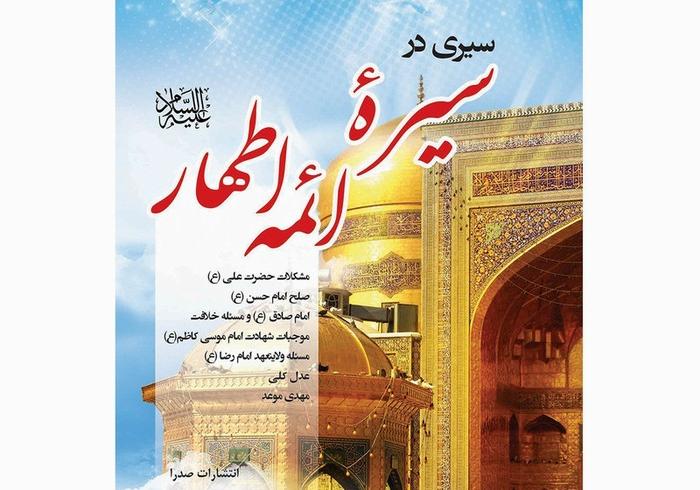
A Journey Through the Conduct of the Imams: In Search of an Answer to the Enigma of War or Peace

A study of the lives of the Imams examines the approach of the Imams (peace be upon them) in dealing with the issue of the caliphate and government.

Taqiyya (pious dissimulation) is a struggle strategy employed by the Shia Imams, based on which they chose their methods in a way that minimized harm to themselves. If Taqiyya is the right course of action, why did Imam Hussain (PBUH) not practice it? And if it is not right, why did the other infallible Imams practice and command it? The book "A Survey into the Biography of the Infallible Imams" opens by posing this very question. By raising this inquiry, Martyr Motahhari seeks to compare the approach of Imam Hussain (PBUH) with that of the other Imams. This content, which serves as the book's introduction, has been selected from the handwritten manuscripts of Martyr Motahhari. In addition to the introduction, the book consists of eight chapters. These eight chapters have been compiled from various speeches delivered by the thinker and martyr, Murtaza Motahhari, at different times and locations. The biographies of the Shia Imams are presented briefly and concisely in this book, allowing readers to familiarize themselves with some of their moral virtues and practical lifestyles, and to adopt the Imams' way of life as a model.

The Challenges of Imam Ali (AS)

Following the introduction, the first chapter of the book is dedicated to the challenges faced by Imam Ali (AS) both before and after accepting the caliphate. In this lecture, Martyr Morteza Motahhari answers the question: why was Imam Ali (AS) reluctant to accept the caliphate? The author emphasizes Imam Ali’s final ultimatum to the people, where he clearly stated: "If I take the reins of the caliphate, I will act as I know best, not as you expect." According to the book, the major challenges faced by Imam Ali (AS) were: The assassination of Uthman ibn Affan, or in other words, the problem of hypocrisy and internal division. Imam Ali’s inflexibility in enforcing justice. At a time when Islamic society had grown accustomed to granting privileges to influential individuals, Imam Ali (AS) would declare: "I am not one to deviate even a hair's breadth from justice." His transparency and honesty in politics. Some argued that Ali lacked political acumen, pointing to Muawiya ibn Abi Sufyan as an example of a clever politician. They viewed deception and trickery as necessary elements of politics, whereas Imam Ali (AS) maintained: "I do not wish to stray from the path of truth." The hypocrisy and rebellion of the Kharijites. Ultimately, Martyr Motahhari considers this to be the most critical challenge during the caliphate of Imam Ali (AS). 

Why Peace and Not War?

The reasons behind and the nature of Imam Hasan’s (AS) peace treaty is the core question that Martyr Motahhari addresses in the second chapter of the book. Citing reliable historical sources, Martyr Motahhari analyzes how choosing peace was not unique to Imam Hasan (AS). The author goes on to highlight the peaceful approach of the Holy Prophet (PBUH) during his stay in Mecca and his first year in Medina, as well as Imam Ali’s (AS) 25 years of patience and peacemaking regarding the caliphate. To further enlighten the reader, he explains the jurisprudential conditions for jihad and peace in Shia fiqh (jurisprudence). In the second lecture of this chapter, Martyr Motahhari analyzes how the varying circumstances of the Shia Imams influenced their choices between war and peace. The different types of jihad and their underlying contexts are among the crucial topics discussed in this section. Ultimately, the insights in Chapter Two provide us with a more precise analysis of our contemporary situation, where economics and politics are deeply intertwined.

From the Issue of the Caliphate to Martyrdom

In the third chapter of the book "A Survey into the Biography of the Infallible Imams," Martyr Motahhari analyzes the characteristics that defined the salvation and spiritual station of Imam Sajjad (AS), such as worship, love, service, supplication, and weeping. Chapter Four is dedicated to the issue of the caliphate during the time of Imam Sadiq (AS). It addresses the question: when the opportunity to claim the caliphate arose at the end of the Umayyad era, why did the Abbasids seize this opportunity, and why did Imam Sadiq (AS) choose not to pursue it? This discussion spans two detailed lectures. The second part of this lecture focuses on how Imam Sadiq (AS) engaged with various intellectual movements—offering highly instructive lessons for the current conditions of our own society. In Chapter Five, Martyr Motahhari analyzes the causes and circumstances surrounding the martyrdom of Imam Musa al-Kadhim (AS). Chapter Six features discourses regarding Imam Hasan al-Askari (AS), while Chapter Seven explores the issue of the regency (Wilayah) and leadership during the era of Imam Reza (AS). Finally, the book concludes with a discussion on the characteristics of the era of the Promised Mahdi (AJ).


Translating to English an German version:

The book "A Survey into the Biography of the Infallible Imams (AS)" has been published in English by the Ahlul Bayt (AS) World Assembly Publications. The French edition of this book has also been released on the market through the efforts of Hela Kamalian. What is expounded in this book is the issue of the caliphate and governance in the lifestyle (Seerah) of the Infallible Imams. The author considers this lifestyle to be an ideal model for transforming the way of life of both ordinary people and government officials. This is particularly relevant these days, as we witness countless self-serving interpretations regarding the concepts of war and peace during the early Islamic era. Reading "A Survey into the Biography of the Infallible Imams (AS)" can assist contemporary readers in measuring the true worth and validity of politicians' rhetoric.

literature

Moving Beyond the Conventional Image of Nahj al-Balagha

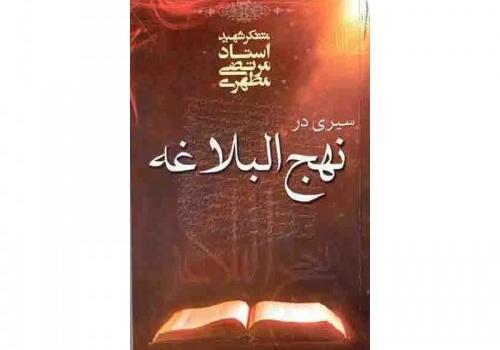
Nahj al-Balagha stands as one of the greatest works in the Islamic world, and A Journey Through Nahj al-Balagha is intended as a concise guide to its vast landscape

The Evolution and Legacy of "A Journey Through Nahj al-Balagha":

The governing logic of the book A Journey Through Nahj al-Balagha is centered on defamiliarizing the publicized image of this profound work, a goal that Shahid Motahhari pursues by candidly admitting his own past unfamiliarity with its world. He writes that despite the name of Nahj al-Balagha being the most frequent title he encountered after the Qur'an, he must confess to being a stranger to its depths just like many of his peers in the seminary. Throughout this work, Motahhari explains the messages of Nahj al-Balagha for the general public in an effort to bridge the gap between people and the text through seven core themes encompassing A Wondrous Book, Theology and Metaphysics, Spirituality and Worship, Governance and Justice, The Ahl al-Bayt and the Caliphate, Preaching and Wisdom, and The World and Worldliness. The origins of these insights date back to a series of lectures delivered at the Hosseiniyeh Ershad which were later published as articles in the journal Lessons from the School of Islam before being meticulously categorized and released as a comprehensive book in 1974. Since then, the book has achieved remarkable success with seventy reprints and numerous translations into languages such as Arabic, Azeri Turkish, Urdu, English, and Russian, while an audio version has also been made available to ensure its accessibility for everyone.

A Journey to Isfahan

The spark for researching Nahj al-Balagha was ignited in Shahid Motahhari’s mind during his trip to Isfahan where he attended the lectures of Ayatollah Ali Shirazi Isfahani. In the book’s introduction, Motahhari explains that participating in these classes made him realize that despite hearing the name of Nahj al-Balagha since childhood, he remained a stranger to it and that the spiritual world he had constructed for himself was entirely different from the world of this sacred text. Motahhari writes that while such a lack of recognition would be personal if it were limited to him, the true issue lies in the fact that the broader Islamic society does not know this book and that its spirit and content remain hidden from everyone. In A Journey Through Nahj al-Balagha, the author strives to provide the reader with direct access to this spirit and content because he considers both delving deep into the messages of the book and conducting scholarly research into its documents and sources to be essential requirements for the modern era. Although Motahhari’s original plan for the book included more than fourteen chapters, he notes in the introduction that due to other commitments, he was only able to complete seven sections, leaving his initial grand design unfinished.

Critiques and Perspectives

Certain critiques have also been directed toward this work, including those from the Supreme Leader, Ayatollah Khamenei, who considers the book’s categorization to be less than comprehensive. In a speech delivered in 1980, he remarked that while several individuals have attempted to categorize the Nahj al-Balagha, these efforts—including the work of the late Motahhari in A Journey Through Nahj al-Balagha—remain introductory and preliminary rather than complete. He further explained that Motahhari did not technically categorize the entire Nahj al-Balagha but instead selected specific themes for what he himself described as a brief exploration, elaborating on each topic by integrating his own understanding with other Islamic intellectual sources while supporting his arguments with citations from the text, a method which constitutes a form of thematic grouping rather than an exhaustive classification. Additionally, the writer and researcher Hossein Hashem-Nezhad regards A Journey Through Nahj al-Balagha as the finest existing resource for understanding the book in the pursuit of an ideal society, yet he points out that the prose in the two middle chapters is particularly dense and challenging. He emphasizes that the complexity of the language in those specific sections makes them primarily accessible to doctoral students of philosophy rather than a general audience.

Shahid Motahhari’s Self-Critique

In the book’s introduction, Shahid Motahhari promotes a spirit of self-criticism by describing A Journey Through Nahj al-Balagha as merely a "glance" or a "brief excursion" rather than a definitive research project. He argues that true research requires a collective effort to reach a deep and precise understanding of the content of Nahj al-Balagha and the school of thought of Imam Ali (AS), especially since investigating the documents and sources of the text is a task beyond the capacity of a single individual. Motahhari was the first to call his own work non-comprehensive, believing that it does not encompass all the themes within Nahj al-Balagha even though it covers vital topics such as monotheism, theology, worship, the concepts of asceticism and piety, the meaning of worldliness and liberty, justice, insights into the life of the Infallibles (AS), and aspects of anthropology. Furthermore, the Binesh-e Motahhar Study Project has published A Journey Through Nahj al-Balagha as an educational text structured into twenty-two lessons titled A Path to Nahj al-Balagha by Seyyed Mohammad Saleh Hashemi Golpayegani. This version provides an overview of the study project itself while outlining a comprehensive schedule for the study, discussion, and teaching of Motahhari’s original insights.

literature

Ali (AS) and Divine Philosophy, an attempt to reconcile religion and philosophy

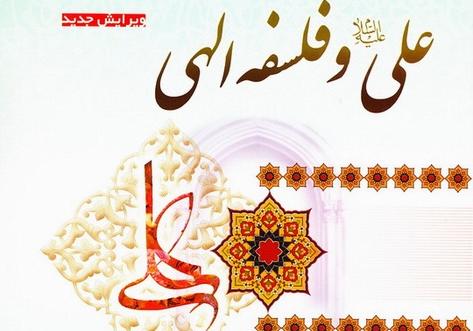
The book Ali (as) and Divine Philosophy attempts to explain divine philosophy from the perspective of Imam Ali (as).

Sayyid Muhammad Husayn Tabataba'i

Allameh Tabataba'i was a renowned commentator, philosopher, jurist, and mystic. He was among the most influential Shia scholars in the intellectual and religious landscape of 14th-century (AH) Iran. His most famous works include Tafsir al-Mizan, Shi'a in Islam, and his philosophical texts Bidayat al-Hikmah, Nihayat al-Hikmah, and The Principles of Philosophy and the Method of Realism. In his book Ali (AS) and Divine Philosophy, written during his youth, Allameh Tabataba'i seeks to articulate divine philosophy from the perspective of Imam Ali (AS). The book begins by defining and explaining philosophy and divine philosophy, then explores the relationship between religion and philosophy, and examines Islamic divine philosophy. Furthermore, it analyzes several of Imam Ali's sermons regarding divine subjects.

Islam and Philosophy

Across 13 chapters, Ali (AS) and Divine Philosophy clarifies the purpose of philosophy—specifically the subject of Divine Philosophy—aiming to create harmony and unity of vision between philosophy and religion. Allameh Tabataba'i argues that there is no clear intellectual evidence to justify a separation between the two; rather, all rational proofs serve to reinforce their shared objectives.

The book traces the evolution of philosophy from its primitive stages to its peak of perfection during the Islamic era. The discussions in this work offer three significant benefits, the first one is historical Evidence that proves to researchers and philosophers that Imam Ali (AS) was the first person in the Islamic Ummah to establish rational proofs and open the door to demonstration (burhan) in divine philosophy. The second benefit is evolution of Thought so that enthusiasts of the history of philosophy can clearly understand the process of its evolution and the pivotal role Islam played in its perfection, and the last one is refuting Misconceptions specifically  It invalidates the belief that religion rejects philosophy or that the two have entirely separate paths and objectives.

Opening the Door to Innovation

In this work, Allameh Tabataba'i opened a new chapter of innovation in philosophy—the highlights of which are detailed by Ayatollah Javadi Amoli in the book Shams al-Wahy al-Tabrizi—by recognizing the religious and Qur'anic roots of rational thought and asserting that philosophical thinking is a path validated by the Holy Qur'an, while emphasizing that all true knowledge originates from Monotheism (Tawhid) and arguing that Shia Islam has been a driving force in the emergence and expansion of rational sciences, especially since the advent of Islam brought a fundamental transformation in concepts such as the Origin, the Resurrection, Man, Intellect, the Soul, and Creation; furthermore, Allameh distinguishes the characteristics of Islamic philosophy from its Greek predecessor by framing the former as a unique intellectual achievement triggered by Islamic revelation, through which he strove to keep the light of philosophy burning while encouraging others to embrace rational contemplation and avoid superstition and fallacies

Divine Religion or Divine Philosophy?

The 108-page book published by the Qom Seminary Press addresses this theme in its introduction where it is stated that considering Divine Religion as separate from Divine Philosophy is truly a great injustice, especially when one considers whether the true happiness of man is anything other than reaching the truths of knowledge—as they truly are—through the God-given capital of intellect and then acting with justice and integrity in practical life, or whether man has any choice but to seek refuge in reasoning and proof to acquire this knowledge. Ultimately, Allameh Tabataba'i concludes the discussion by asserting that the path of the Prophets is a call to the explicit Truth and those divine insights that human beings, by their innate nature (Fitra), long to attain.

literature

Ethics in Islam seeks the realization of inherent potentials.

Divine religions establish principles for their followers, and Ethics in Islam seeks to explain Islamic moral principles for its own adherents.

Behrouz Rafiei

Behrouz Rafiei was born in 1957 in Fereydan, Isfahan. His resume is highlighted by his roles as a translator, a faculty member of the Department of Educational Sciences at the Research Institute of Hawzah and University, and an instructor for Master’s and Doctoral programs at various academic centers, including Al-Mustafa International University, the Specialized Center for Ethics and Education at the Qom Seminary, and the Imam Khomeini Education and Research Institute. With 19 book titles and over 40 scientific articles to his credit, he published his first work in 1999, titled Descriptive and Subject Bibliography of Islamic Ethics, Mysticism, and Sufism. This publication followed his decision to abandon his law studies at the University of Tehran for undisclosed reasons in favor of a career dedicated to research, authorship, and translation.

The Works of Rafiei

Driven by a passion for religious studies, Behrouz Rafiei entered the Tehran Seminary prior to the Islamic Revolution. After the Revolution, he spent some time in executive roles before migrating to Qom with his family in 1984 to pursue advanced religious studies. In 1993, he was admitted to the law program at the University of Tehran through the national entrance exam; however, he withdrew from the university after completing 100 credits. His second major book, The Views of Muslim Scientists on Education and Its Foundations (Volume 3: Imam Mohammad Ghazali), was selected as the Book of the Year of the Islamic Republic of Iran in 2003. This five-volume series explores the perspectives of Muslim thinkers on education, with Rafiei authoring the third volume. Additionally, his Descriptive-Analytical Bibliography of Education in Islam: Selected Arabic Sources was published in 2002 and earned third place for the Seminary Book of the Year in 2003. Rafiei holds a Master’s degree in the History and Philosophy of Educational Sciences from the Research Institute of Hawzah and University. His research and writing primarily focus on Islamic education, Islamic ethics, bibliography, and Arabic-to-Persian translation.

Ethics in Islam

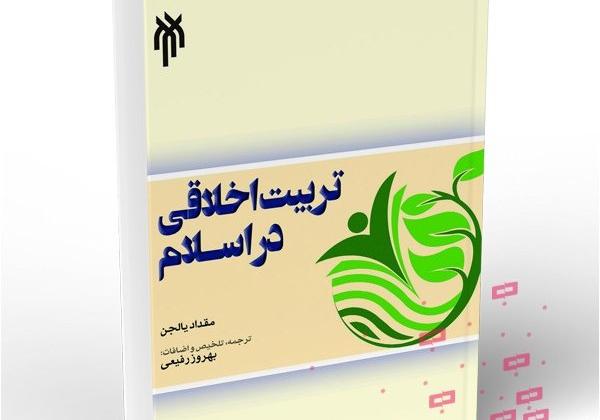
Another notable work by Behrouz Rafiei is the book Ethics in Islam, published in English. This volume is a collection of articles by prominent Iranian thinkers and professors in the field of ethics, featuring nine articles on the background and nature of Islamic ethics. The first article, by Dr. Seyyed Jalaluddin Mojtahedi, examines the foundations of ethics in Islamic culture, while the second, by Dr. Gholamreza A’avani, traces the transmission of ethical texts to the Islamic world. Other articles cover topics such as the emergence of ethical schools in Islam, the foundations of the philosophy of ethics, the relationship between practical and theoretical philosophy, the origins of moral commands, criteria for evaluating actions, ethics in the Quran, and starting points in practical ethics. Rafiei compiled these articles to analyze the vital status of ethics in Islam, emphasizing that human beings require moral education to realize their inherent potential.

Principles of Moral Education

In his article "Principles of Moral Education from an Islamic Perspective: A Comparative Approach," Behrouz Rafiei demonstrates that Islam focuses on four core principles in education: the compatibility of means with ends, complete commitment to moral behavior, consideration for individual differences, and the objective and subjective reflection of ethics. Rafiei argues that these principles are universal and aligned with human nature. He stresses the necessity of examining these principles to ensure that the methods chosen for moral education are inherently appropriate; many tools may appear educational but actually yield counterproductive results that disrupt the learning process. Rafiei asserts that to measure the merit of educational activities, one must establish principles that clarify the achievement of moral goals, the harmony between means and ends, and the morality of the students' behavior. Drawing from Islamic insight, Rafiei believes that "a good will is the essence of moral behavior; it is the good will that gives behavior its moral color, and the work of the heart and a good will can never be tainted by evil."

literature

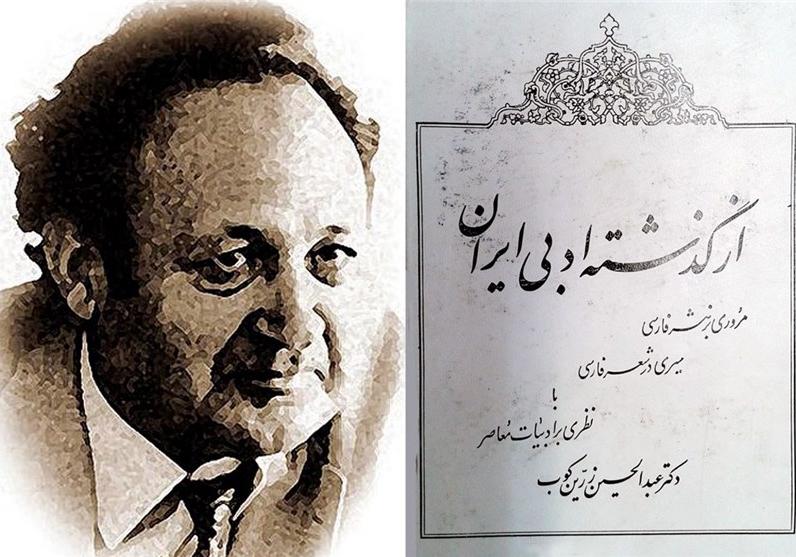
From Iran s literary past, a narrative of the flourishing of Iranian culture in past centuries.

Iran is an ancient country with an authentic culture, a culture that has maintained its vibrancy throughout the centuries.

It is often said that the works of Dr. Abdolhossein Zarrinkoub are characterized by nested sentences and are saturated with unfamiliar terms and idioms; consequently, his writings do not easily appeal to those seeking simplicity. Zarrinkoub is regarded as a preeminent man of letters, historian, Islamic scholar, and Iranologist. In his numerous works within the field of literary criticism, he interpreted and analyzed the sublime concepts found in the masterpieces of giants such as Hafez, Rumi, Nezami Ganjavi, and Khaqani, maintaining a scholarly and critical perspective toward Iran’s literary heritage. He left behind a vast bibliography, including: With the Caravan of Hilla (Ba Karevan-e Holleh), From the Alley of the Libertines (Az Kooche-ye Rendan), Step by Step until the Visitation of God (Peleh Peleh ta Molaghat-e Khoda), The Sage of Ganja (Pir-e Ganjeh), In Search of Nowhere (Dar Jostojoo-ye Nakojabad),The Book of Renown (Namvar Nameh), Two Centuries of Silence (Do Gharn Sokoot), The History of People of Iran (Tarikh-e Mardom-e Iran), The Dawn of Islam (Bamdad-e Eslam), History in the Balance (Tarikh dar Tarazoo).

Abdolhossein Zarrinkoub was a thinker who summoned the entire treasury of the Persian language—both ancient and modern—to express the findings of his mind. He had no reservations about employing archaic structures alongside contemporary themes. For this reason, his works remain free from the common linguistic calques (loan translations) of other languages, possessing a truly authentic Persian character.

Iran's Literary Past

The book "Persian Literary Heritage" (Az Gozashte-ye Adabi-ye Iran), authored by Dr. Abdolhossein Zarrinkoub, offers a comprehensive review of Persian prose and a journey through Persian poetry, while providing insights into contemporary literature. Within this work, the transformations of verse and prose are examined in two distinct sections, as the author seeks not only to analyze the evolutionary process of Persian literature but also to depict the flourishing of Iranian culture throughout past centuries. This book consists of a collection of Dr. Zarrinkoub’s notes organized into 92 sections, serving as an invaluable resource for gaining familiarity with the history of Iranian poetry and prose.

The author’s summary and conclusion of the book state that in the evolution of both poetry and prose, factors beyond the political, social, and economic conditions of each era have played a significant role; these include the inherited traditions of each culture and the reflection of often repressed or censored desires and emotions from the past, which have been preserved over centuries within the collective unconscious of generations. These suppressed feelings and longings have found an opportunity to manifest during the evolutionary path whenever necessary or when a chance arose, whether in the form of a "return" to the past or as a "modernity" that was often accepted with great difficulty by the people of that time.

Although this book examines Iran's literary past and takes the form of a literary history, it does not strictly fit within those conventional frameworks, as it goes beyond the boundaries of literary history to identify the causes and factors that influenced the emergence of Iran’s cultural heritage. The final section of the book focuses on contemporary literature, specifically covering figures who have already passed away. The author believes that reviewing Iran's past serves as an introduction to today's literature and a benchmark for evaluating the degree of harmony between the current generation's culture and the requirements of our contemporary era.

Close Bond with the Humanities

Dr. Abdolhossein Zarrinkoub possessed a profound understanding of the nature of Western culture and civilization on one hand, and a complete mastery of Iranian culture on the other. This dual perspective lent a sense of comprehensiveness to his insights and expressions, motivating him to contemplate how modern Iranian culture—which is essentially a blend of traditional heritage and Western influence—could be organized and harmonized. In many of his lectures and articles, he addressed themes such as Westernization versus Western-avoidance, the intricacies of national culture, and the methods of cultural borrowing from the West. Regarding Islamic civilization, he wrote that it was neither a mere imitator of past cultures nor a simple continuation of them; rather, it was a synthesizer and a creative perfectionist that inherited the ancient cultures of both East and West. Its period of maturity, which concluded with the Mongol conquest, was an era of construction—the building of a global and humane culture. What rendered this civilization universal was the passion and will of individuals who, regardless of their ethnic or national origins, acted as heralds and teachers of Islam. Zarrinkoub dedicated his life to study, teaching, research, and writing, maintaining a simple lifestyle and never succumbing to the temptation of non-academic pursuits. The authorship of dozens of books and articles demonstrates that this tireless and relentless scholar never wavered from the path he chose.

literature

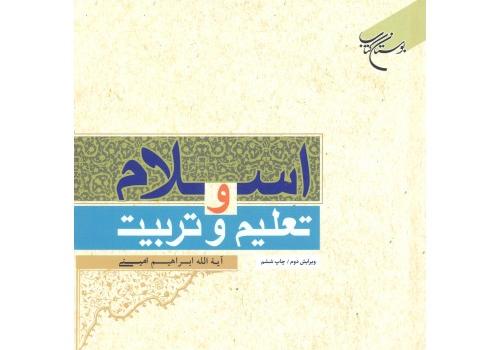
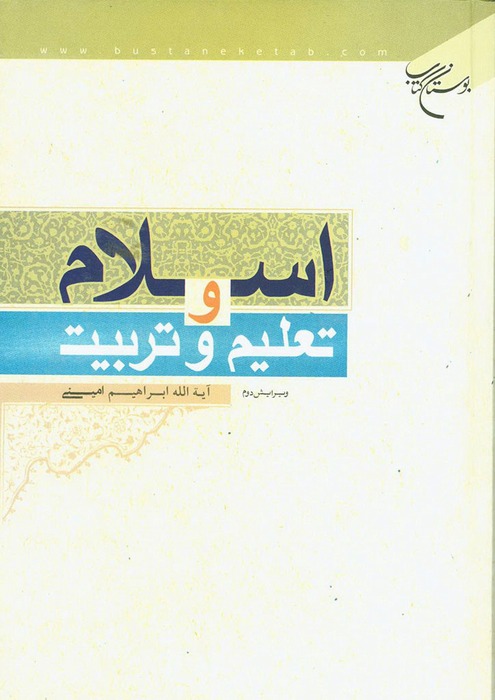
Islam and education a path to reforming oneself and society.

Great people always have a big question before them: How can we lead ourselves and society towards salvation The answer that Islam and Education seeks to find.

"Islam and Education" is written by Ibrahim Amini. In this work, the author examines the educational attitudes of Islam with moral, anthropological, hygienic, and psychological approaches. By studying the book "Islam and Education," the audience becomes acquainted with the definition, subject, foundations, principles, goals, stages, factors, and methods of Islamic education from an Islamic perspective. In some parts of the book, the viewpoints of certain non-Muslim scientists are also mentioned. To better define education, the author first examines the role of the mentor in upbringing and notes that in verses and narrations, the word "Tarbiyat" (education) is used less frequently, while "Tazkiyah" (purification) and "Ta’dib" (disciplining) are used more often.

Reforming Oneself and Society

The definition of education, the human being and their educational dimensions, heredity and education, and those responsible for education and their heavy responsibility are among the important chapters of this book. The author considers education to be a universal responsibility and believes that if everyone feels responsible and fulfills their duty in this regard, the groundwork for the proper upbringing of individuals will be prepared. He goes on to explain the educational responsibilities of the family, school, national media, religious scholars, writers, and the Islamic government, and mentions the factors effective in education and the necessity of coordination between them. He believes: Education holds a very important position in Islam, and the Great Prophet of Islam, in one of his sayings, stated the goal of his mission to be the completion of moral virtues. This book, penned by one of the prominent Muslim scholars, expresses the moral and educational principles of Islam by citing verses of the Holy Quran and the Hadiths of the Infallibles so that by practicing them, oneself and society may be reformed.

Stages of Education

In the book "Islam and Education," Ibrahim Amini mentions three stages for education.

  1. The first stage of education (before birth): He believes that the educational role of the father and mother begins before the birth of the child. In explaining this statement, Amini speaks of the choice of a spouse and their role in the happiness, health, and education of the child. He addresses the pregnancy period and mentions the following hygienic topics: the beginning of pregnancy, the sensitivity of the pregnancy period and maternal nutrition, Islam's view on the nutrition of a pregnant woman, the impact of the mother's food on the child's character, the role of clean air and rest in the health and growth of the fetus, and childbirth are the discussions raised in this section.

  1. The second stage of education (the first two years of life): In this stage, the author highlights the role of nutrition in education and points to tips such as: the role of breast milk in education, Islam and breast milk, Islam and the effect of milk on the child, the effect of food on the milk, the breastfeeding schedule, if the milk is insufficient, weaning the child, etc.

  2. The third stage of education (after two years of age): In this section, Amini divides the child's education into two parts: physical education and spiritual education, and explains the sensitive role of the family and the learner (the one being educated) in this stage.

The Necessity of Knowing the Learner

The necessity of knowing the learner is one of the important sections of the book "Islam and Education." The author points to the age, psychological, and spiritual differences between the mentor and the learner and reminds that this lack of harmony is one of the great obstacles to education. Therefore, the mentor must strive, as much as possible, to act like a child when educating a child, just as the Holy Prophet (PBUH) did in his behavior with children. Another requirement for educating a human is the existence of understanding between the mentor and the learner, which he explains; after referring to the role of faith in education, he speaks of the role of intellect in education, refers to the position of intellect in moderating instincts, and recounts the effects and signs of a wise person through the language of narrations. The author subsequently reminds of the enemies of the intellect and examines the ways of cultivating the intellect from the perspective of the Quran and Hadith, which include: employing the intellect, reflection, considering consequences, consultation, accepting the truth, socializing with the wise, and curiosity. Sexual maturity is another important topic of this book.

In this section, Amini addresses the difference in puberty between girls and boys, speaks of the sexual curiosity of adolescents and the correct way to respond to them, and refers to the moral-psychological deviation of voyeurism (improper gazing) and its harms to the individual. He considers the responsibility of the father and mother in guiding children to avoid these issues to be important. Subsequently, he brings up the role of Hijab in protection against sexual deviations and addresses marriage and its role in sexual education, explaining the obstacles to marriage and their solutions.

The Method of Honoring (Takrim)

At the end, the book presents the method of "Takrim" (honoring/dignity) as a solution for families.

Tools for honoring the child, conditions for honoring the child; the method of forgiveness and cases for its use; the method of benevolence in the face of misconduct; the role of affection in education, the effect of affection on the child, the necessity of expressing affection, avoiding making affection a bargaining chip, and the harms of excessive affection, etc., are among the headings of this section so that concerned parents can have a comprehensive package and a roadmap with an Islamic view in response to the question of how to educate from an Islamic perspective.

literature

Human rights from an Islamic perspective and answers to important questions.

The image of Islam and human rights from the perspective of Islam that has been portrayed in the minds of the world’s people through the media has many flaws.

The Islamic Culture and Relations Organization (ICRO) 

The Islamic Culture and Relations Organization (ICRO) is a government entity primarily responsible for promoting and explaining the objectives of the Islamic Republic of Iran beyond its borders, with the participation of cultural counselors (attachés). Mission: "To create and expand knowledge, interest, and belief toward pure Islam, the Islamic Revolution, the advantages of the Islamic Republic of Iran, and Islamic-Iranian culture and civilization in other societies, in order to spread the light of Islam and strengthen Islamic, religious, and spiritual convergence and bonds." The organization is a subsidiary of the Ministry of Culture and Islamic Guidance. Its mission involves the management and leadership of international cultural relations, as well as policymaking, coordination, guidance, support, and supervision of the cultural-missionary activities of the Islamic Republic of Iran abroad.

The International Deputy

The organization features five departments, including the International Deputy, which is responsible for directing and coordinating cultural activities outside the country. It operates through five general directorates and pursues its goals via the representations and cultural centers of the Islamic Republic of Iran abroad. Core activities of these representations include: Monitoring cultural news and developments in the host country, Organizing cultural weeks, art exhibitions, and film festivals, Holding Quranic exhibitions and specialized cultural/religious conferences, Reflecting the achievements of the Islamic Revolution, Facilitating communication between academics, religious scholars, and artists, Expanding Persian language and literature, Engaging in dialogue with various religions and denominations. These activities are conducted within the framework of five general directorates: Asia and Oceania, Africa and Arab countries, Europe and America, International Organizations, and the International Center for Preaching. 

The Center for International Cultural Studies, affiliated with ICRO, held a scientific conference titled "Human Rights from the Perspective of Islam." The resulting book includes 18 articles, covering subjects such as: Sources of human rights in Islam, Comparative analysis of human rights in Islam and the West, Political rights of the people in Islam,  A critical review of the Cairo Declaration on Human Rights in Islam, International regulations regarding women’s rights and economic independence,  Humanitarian law in Islam and contemporary international law.  The translation of this book into English serves the organization’s mission to disseminate the truths of Islam and the message of the Revolution globally.

History and Leadership

Founded in 1995 (1374 SH), ICRO was created to consolidate the cultural and missionary sectors of various government institutions active abroad. Chronology of Presidents: Mohammad-Ali Tashkiri, Mahmoud Mohammadi Araghi, Seyyed Mehdi Mostafavi, Mohammad-Bagher Khorramshad,  Abouzar Ebrahimi Torkaman (served for 8 years), Mohammad-Mehdi Imanipour (Current President).

Imanipour identifies "effective storytelling of Iran abroad" as the organization's primary task. His appointment decree emphasizes 13 specific goals, notably the use of young revolutionary forces, sustainable relations with neighboring countries, and the promotion of Persian literature.

literature

My Model for a world that thirsts for another way.

Modernity has distracted man from spirituality and caused him to become alienated. Therefore, another path must be taken...

“Awakened Muslims must understand that their salvation and victory lie in recognizing and following the Prophet Muhammad (PBUH). There is no doubt that courageous and faithful youth are the greatest hopes of Islam and stand at the forefront of this great struggle. We hope for the triumph of light over darkness.” This statement reflects the central vision of the book My Role Model (Olgou-ye Man), written by Hojjat al-Islam Seyyed Javad Beheshti. The author maintains that contemporary humanity is in urgent need of becoming familiar with the way of life of the Prophet and the divine Book he brought. He expresses hope that God’s promise regarding the global spread of the message of Prophet Muhammad (PBUH) will soon be realized. Written in a simple and accessible style, the book explains the moral virtues and behavioral model of the Prophet of Islam. It is based on narratives and traditions from his life, covering his childhood, his conduct (sīra), and his selection as the final Messenger. Various sections of the book recount the Prophet’s Ascension (Mi‘raj), his migration (Hijrah) to Medina, and the battles of early Islam. In the final section, the Prophet is presented through the lens of the Qur’an, with forty verses that examine different dimensions of his character. In other words, the author introduces the Prophet’s conduct, traditions, personality, and interactions from a Qur’anic perspective.

My Role Model chapters:

My Role Model was prepared for adolescents and young people at the request of the Planning Headquarters for the Year of the Prophet Muhammad (PBUH) and the Ministry of Education. Al-Hoda International Publications, affiliated with the Islamic Culture and Relations Organization, has translated and published the book in both Arabic and English. Although primarily intended for youth, the book is also beneficial for adult readers. The author hopes it contributes to the promotion of prophetic ethics and lifestyle. The book is organized into seven sections: The Rising of the Sun, The Childhood of Muhammad (PBUH), A Journey into the Unseen, The Migration (Hijrah), Memories of War and Struggle, Work and Effort, Physical Education and Muhammad (PBUH) in the Mirror of the Qur’an. 

Seyyed Javad Beheshti was born in 1954 in Kashan. He pursued traditional seminary education up to the advanced level of jurisprudence (kharij al-fiqh). He has held several executive positions, including Director General of the Office of the Qur’an and Ahl al-Bayt Affairs and advisor to the Minister of Education. He has authored around ten books, including: Interpretation of Family Verses in the Qur’an, Methods of Inviting to Prayer, A Reconsideration of Religious Literature. He is also a recognized expert affiliated with the Headquarters for the Promotion of Prayer and a contributor to the well-known television program Lessons from the Qur’an, presented by Hojjat al-Islam Mohsen Qara’ati. He studied at the Haqqani Seminary.

Lessons from the Prophet

 The book was published in 2006 (1385 SH), the year that Ayatollah Khamenei, the Supreme Leader of the Islamic Republic, designated as the “Year of the Prophet Muhammad (PBUH).” In his Nowruz message, he emphasized that society should revisit the teachings of the Prophet and incorporate them into daily life and practical programs. The need to promote the Prophet’s teachings—ethical conduct, dignity, pursuit of knowledge, mercy, and unity—led the Ministry of Education to commission this book as a step toward fostering moral development among teachers, parents, and students.

Efforts to Promote Prayer

 Hojjat al-Islam Seyyed Javad Beheshti has devoted his life to explaining and promoting the culture of prayer (salat). His frequent presence in media programs has made him a prominent figure in this field. His books Along with Prayer and Methods of Inviting to Prayer have received considerable attention. He attributes his commitment to attending the mosque—especially for the dawn prayer—to his mother. From the age of six, he accompanied her to the mosque even during cold winter mornings. After the prayer, he would recite Du‘a al-‘Ahd and Ziyarat Ashura before returning home. He considers this path to be the way of salvation and dedicates his efforts to encouraging others to follow it.

literature

The Selected from the History of Iran a complete look at contemporary Iran.

The contemporary history of Iran has many ups and downs, and Al-Montakhab min Tarikh Iran (The Selection from the History of Iran) is an attempt to provide an overview of these ups and downs.

The book Iran or a Selection from the History of Iran is written by Reza Shabani. This work is a brief account of the events in Iran’s history, with its stated purpose being “to inform and familiarize a general international audience with Iranian-Islamic culture and civilization.” The book’s discussions begin with a brief overview of the pre-Islamic period and concisely recount the various dynasties and eras of Iranian history up to the advent of the Islamic Revolution. A smaller portion of the book deals with the pre-Islamic dynasties of Iran, from the Medes and Achaemenids to the successors of Alexander the Great, and the rise of the Parthians and Sassanids . In examining the major events of Iran’s post-Islamic history, and especially during the era of the minor and major contemporary dynasties —such as the Tahirids, Saffarids, Samanids, Alawites of Tabaristan, Ziyarids, and Buyids—as well as Turkic dynasties—including the Ghaznavids, Seljuks, and Khwarazmians—ruled over Iran, the book provides more details about the rise and fall of figures and the shifting of their centers of power. The tragic catastrophe of the Mongol invasion and the widespread massacre of the people is another event recounted in the book. In this section, the author describes the prominent events of these periods, covering the rise and decline of the Safavid dynasty, the emergence of Nader Shah, the Qajar era, and the Pahlavi dynasty. This book has been translated into Arabic by Dr. Saad Rostum.

"Iran, or A Selection from the History of Iran" is a book by Reza Shabani. This work provides a concise account of the events of Iran's history, with the stated aim of "informing and familiarizing general foreign audiences with Iranian-Islamic culture and civilization." The book begins with a brief overview of the pre-Islamic period and succinctly recounts the various dynasties and eras of Iranian history up to the advent of the Islamic Revolution. A smaller portion of the book is dedicated to the pre-Islamic dynasties of Iran, covering the Medes and Achaemenids through the successors of Alexander the Great, as well as the rise of the Parthians and Sassanids . In examining the major events of post-Islamic Iranian history—especially from the time when smaller and larger contemporary dynasties (the Tahirids, Saffarids, Samanids, Alawites of Tabaristan, Ziyarids, and Buyids) and Turkic dynasties (the Ghaznavids, Seljuks, and Khwarazmians) ruled over Iran—the book provides greater detail regarding the rise and fall of various figures and the shifting of their power centers. The tragic catastrophe of the Mongol invasion and the widespread massacre of the people is another event recounted in the book. In this section, the author describes the prominent events of these periods, covering the rise and decline of the Safavid dynasty, the emergence of Nader Shah, the Qajar era, and the Pahlavi dynasty. This book has been translated into Arabic by Dr. Saad Rostum.

Works of Dr. Shabani

In recent decades, numerous studies and research projects have been conducted on contemporary Iran, covering all its cultural and civilizational dimensions, including religion, history, geography, literature, art, economics, and politics. However, the lack of a single comprehensive book encompassing all these mentioned aspects has been one of the obstacles facing researchers and enthusiasts both domestically and abroad. The book Iran or a Selection from the History of Iran was written to address this need. Dr. Reza Shabani, the author of this book, throughout his prolific career of life, succeeded in writing more than 200 articles in Persian, French, and English, as well as authoring over 20 books. Most of his scholarly works are focused on the history of the Afsharid period. Dr. Shabani's writings can be divided into five categories: critical editions of texts, historical research on the Afsharid and Zand dynasties, the history of ancient Iran and the general history of Iran, monographs, and collections of articles on various topics. Among Dr. Shabani's works on the ancient past and general history of Iran, one can mention two books: A Brief Overview of the History of Iran: From the Beginning of the Median Era to the End of the Qajar Period and General History of Iran, which was written for foreign students of Persian language and literature. The book Iranians and National Identity is one of Dr. Shabani's significant works. Additionally, in his book Foundations of the Social History of Iran, he discusses, across five sections, the general characteristics of prehistorical Iranian society, its presence in history, the historical formation of Iranian communities, national resistances, and the characteristics of Iranian culture and civilization. 

Permanent Figure of the Year 2010 (1389 Solar Hijri)

Dr. Reza Shabani served for many years as the department head of history at various universities in Iran and is considered one of the five leading researchers in the field of Afsharid and Zand dynastic history. Since January 2000 (Dey 1379), he has been the director of the Department of History of Civilization at the International Center for Dialogue Among Civilizations and the head of the Iran-Pakistan Persian Research Center in Islamabad. In 2010 (1389), Reza Shabani was recognized as a 'Lasting Figure' or 'Eternal Face' (Chehreh-ye Mandegar) of Iranian history. The "Lasting Figure" festival has so far been held in eight rounds, and the honorees of this event are regarded as pillars of Iran's national identity and cultural heritage. In an interview with Keyhan Farhangi, Dr. Shabani recounted his life story. He was born in 1938 (1317 Solar Hijri) in the village of Zamghabad, Taleqan. He completed his six years of primary school in the village and later moved to Tehran for further education. He studied history and geography at the Daneshsara-ye Ali (Higher Teachers' College) in Tehran, where he earned his bachelor's degree. In 1967 (1346), he went to France to pursue a PhD in history and studied at the Sorbonne University. This history researcher is a professor at Shahid Beheshti University and has also taught at the University of Isfahan and the University of Cambridge in England. He attributes all that he has achieved in life to his family and believes: "Despite all the changes it has seen to this day, the family remains the most important foundation for human upbringing. If we can preserve the stable position of the family in society and present the set of social, moral, and behavioral values within the family in such a way that our children and adolescents are drawn to it, then I can say that the family will deliver the most virtuous and healthiest individuals to society."

literature

Untitled Poem’: A Critical Look at the Occupation of Palestine

The issue of Palestine and its occupation has plunged the West Asia region into crisis for decades

The book "Untitled Poem" (Qasidatun bila 'Unwan) is written by Mouna Bazaowi. This volume contains a collection of the author’s modern poetry, in which she adopts a protest-oriented and critical perspective on the occupation of Palestine and the suffering of its people. This book represents a literary insight from within Arab society into the situation of Palestine: "O Palestine, may you remain exalted and radiant in the heights of the eternal Islamic sky / By the testimony of the Prophets and the Quran, you shall remain everlasting across the expanse of history / O mother of the world and newborn of every era... / By the honor of the long-standing and enduring heroes / We shall grant you freedom when the promise is fulfilled / By the testimony of history / We shall engrave the letters of your name in the hearts of children / And we shall write your name on the brilliance of stars and constellations on the Night of Power (Laylat al-Qadr)."

Mouna Bazaowi and Iran

Mouna Bazaowi lives in Kairouan, Tunisia. She studied Arabic Language and Literature with a focus on mysticism and Sufism, earning her doctorate from Carthage University in Tunisia. She began learning the Persian language at the Cultural Center of the Islamic Republic of Iran in Tunisia. The Cultural Center held Persian language classes at Carthage University. Persian Language and Literature is taught in five national universities in Tunisia, including Al-Manar, Carthage, and the April 9th University. She has a great interest in Iran and says of Imam Khomeini: "Imam Khomeini was a thinker and a mystic whose place in history is very significant. He supported Islam and Islamic countries globally and was the founder of International Quds Day." Her works include "Love and the Diwan," "Love and Punishment," "Love, the Dance of Fate," and "A Journey Like Thousands of Journeys." The subject of "A Journey Like Thousands of Journeys" is Iran. Bazaowi explains her motivation for writing this book as follows: "The main reason for writing this book was that before traveling to Iran, I imagined the country differently. However, after seeing Iran, all my preconceptions and what I had heard were shattered. I decided to write a book to introduce the true face and civilization of Iran and its people to the people of Tunisia; for truth is revealed only through writing."

Concern for the Oppressed of the World

Bazaowi is a mystical poet who has always been concerned with the oppressed (Mustad'afin) of the world and the Islamic community. This concern is evident in the book "Untitled Poem." She considers attention to the issue of Palestine and the Holy Quds to be one of the most important duties of the Islamic Ummah, and for years she has strived to introduce Palestine and Quds as the guiding light of Islam from her perspective.

Reflecting on Palestine

In the past decade (from 2011 to 2021), at least 18 books on the subject of Palestine have been published by Iranian and foreign authors. Notable among these are: Thinking Palestine by Ronit Lentin; Lest You Be Forgotten: Memoirs of the Displaced People of Palestine by Morteza Mohammadi; Palestine: The Axis of Unity, a collection of articles from the 33rd International Islamic Unity Conference; The Issue of Palestine by Saeid Solh-Mirzaei, based on the speeches of Ayatollah Khamenei, the Leader of the Islamic Republic of Iran; The Israel-Palestine Conflict by Tamra Orr; Ten Myths About Israel by Vahid Khozab and Ilan Pappé; The Deal of the Century by Fatemeh Zahra Alinejad and Zahra Khaniani regarding the policies of President Donald Trump toward Palestine; The Ethnic Cleansing of Palestine by Ilan Pappé; Balfour and Weizmann: The Zionist, the Zealot and the Emergence of Israel by Geoffrey J. Lewis, a prominent work in the study of Zionism; An Introduction to Understanding the Occupying Regime of Quds by Mohammad Taghi Pourian and Mostafa Saveh Doroudi; and the book On Palestine by the renowned contemporary thinkers Noam Chomsky and Ilan Pappé.

The book On Palestine describes the background of how present-day Palestine came to be, stating that while the Palestinian issue is one among thousands of disorders and tragic events occurring globally, the role of Western governments and the complicity of major economic corporations have made it a unique case. The fact that Israel benefits by flouting international laws and norms, while Western governments roll out the red carpet for Israel and ignore its aggressions, means that every one of us bears a responsibility to end this injustice afflicting the Palestinians. The people of Iran have always shown their commitment to the liberation of the Holy Quds, and every year on Quds Day (the last Friday of the holy month of Ramadan), they take to the streets to remember the oppression against the Palestinian nation and the children, women, and men who are killed and martyred in the path of resistance, crying out for the rights of the oppressed people of Palestine.

literature

A Collection of Philosophical Essays: A Path to a Better Understanding of Islam

Islam’s response to fundamental philosophical questions can provide a precise path to understanding its essence.

Mehdi Dasht-Bozorgi is a graduate of Western Philosophy from the University of Tehran. He completed both his M.A. and Ph.D. degrees in Islamic Philosophy and Theology (Kalam) at Tarbiat Modares University. He was born in 1963 in Ahvaz, Iran. Since February 1999, he has been a full-time faculty member of the Department of Philosophy of Religions at the University of Kashan. At the University of Kashan, Dasht-Bozorgi teaches a wide range of courses, including Peripatetic (Mashsha’i) Philosophy, the philosophy of Mulla Sadra, classical and modern logic, Arabic language, English for specific purposes, Islamic mysticism (ʿIrfān), and Islamic theology (Kalam). He has translated three major works from English into Persian: My Intellectual Autobiography by Rudolf Carnap, Existentialist Theology by John Macquarrie, and Philosophy of Science by Alex Rosenberg. In addition, he has translated Ali and Divine Philosophy by Allameh Tabataba’i and An Introduction to Islamic Philosophy by Abdolrasoul Oboudiat from Persian into English. His original authored works include The Devil’s Bazaar, Mi’at Qissat Qasirah (One Hundred Short Stories), and Hidden Tears. Among his notable academic articles are Carnap and the Theory of Knowledge, A Response to Abu Zayd’s Critiques, and The Unity of Intellect and Intelligible: A Comparative Study of Avicenna and Mulla Sadra. All of his translations from Persian into English were carried out in collaboration with Dr. Fazel Asadi Amjad.

Studies in Islamic Philosophy

 Dr. Fazel Asadi Amjad holds a B.A. in English Language and Literature from the University of Tehran, an M.A. in English Literature from the same university, and a Ph.D. in English Literature from the University of Glasgow. He is currently a professor in the Department of Foreign Languages at Kharazmi University. One of the significant works translated jointly by Dr. Dasht-Bozorgi and Dr. Asadi Amjad from Persian into English is Studies in Islamic Philosophy, a collection of philosophical essays. This volume brings together scholarly articles authored by Iranian academics and researchers, many of which were originally presented at academic and research conferences. The primary aim of this collection is to open avenues of dialogue between Muslim and non-Muslim philosophers and to provide a platform for critical engagement and the constructive presentation of philosophical ideas for the future. The essays explain the foundations of Islamic philosophical thought and reflect a shared consensus that Islamic intellectual traditions have paved the way for addressing contemporary and emerging intellectual needs. Muslim philosophers have played a crucial role in interpreting and explicating the principles of ancient Greek philosophy, particularly those associated with Plato and Aristotle. From the perspective of interpreting philosophical and theological issues within Islamic philosophical schools and the Muslim world, this book is of considerable importance to scholars and researchers in philosophy seeking new insights.

Throughout history, humanity has explored fundamental questions and necessities of life within frameworks such as culture, society, politics, and religion, yielding significant intellectual achievements. The profound influence of religious principles on these accomplishments cannot be overlooked. Even a brief examination of the history and culture of nations demonstrates the foundational role of religion in shaping human thought and civilization. Through translating this work, Dasht-Bozorgi and Asadi Amjad hope to deepen understanding of the role of religion in achieving these intellectual and cultural developments.

Philosophy of Science

Dasht-Bozorgi and Asadi Amjad have also sought to sustain this intellectual dialogue by translating Western philosophical works into Persian. One such work is Philosophy of Science by Alex Rosenberg. Philosophy of science encompasses various branches, including the philosophy of natural sciences, the philosophy of social and human sciences, the philosophy of history, and subfields such as the philosophy of law, economics, social sciences, and political philosophy. However, the focus of Rosenberg’s book is philosophy of science in its strict sense—that is, the philosophy of the empirical and natural sciences, particularly physics and philosophy of biology. Philosophy of science enables scientists to avoid a narrow understanding of their own disciplines and to better grasp the true position of science and experience. The book seeks to caution students of the empirical sciences against naïve positivist absolutism and to help them recognize that not all aspects of reality are reducible to sensory experience or experimental verification. Many essential human phenomena cannot be fully subjected to empirical testing; understanding such phenomena requires philosophical rather than purely scientific methods. Alex Rosenberg aims to demonstrate that the problems of philosophy of science are, in fact, fundamental philosophical problems. These issues manifest themselves in the ongoing efforts of scientists and students alike to comprehend the nature and limits of science.

literature

Iran: A History of Art – A Study of Iranian Art and Its Evolution

iranians had the art of art since the ancient time , but the arrival of islam to iran played a special role in strengthening some art such as architecture .

 
Iran: A History of Art by Habibollah Ayatollahi

The book Tārīkh al-Fann fī Īrān (History of Art in Iran), written by Dr. Habibollah Ayatollahi and translated into Arabic by Ali Mashkouri, is a comprehensive study of Iranian art from the pre-Islamic period through the post-Islamic era up to the emergence of the Islamic Revolution of Iran. In Persian, the work is published under the title Iran: A History of Art. This volume provides an extensive examination of diverse artistic disciplines, including architecture, ceramics, wood carving, stone inscriptions, and other visual and material arts. Through a historical and analytical approach, the book traces the evolution of Iranian artistic expression across successive cultural and religious periods. 

Education and Academic Formation of Ayatollahi

Habibollah Ayatollahi was born on 7 March 1935 (16 Esfand 1313) in Shiraz. Demonstrating an early interest in painting, he pursued higher education in fine arts at the Faculty of Fine Arts, University of Tehran, graduating in 1960 (1338). He ranked among the top students of his cohort, a distinction that qualified him for a government-sponsored scholarship to study abroad. Under the national program for outstanding graduates, Ayatollahi traveled to France, where he spent three years training in the studios of Legault and Aujame. He subsequently enrolled at the École des Beaux-Arts de Paris, where he studied modern painting techniques and mural painting. His education continued at the École Nationale Supérieure des Arts Décoratifs, specializing in ornamentation, interior architecture, contemporary mural painting, sculpture, and industrial design. Simultaneously, Ayatollahi pursued academic studies at the Sorbonne University, earning a PhD in Analytical and Comparative Art History in 1971 (1349). His doctoral dissertation, titled A Comparative Study of Pre-Islamic and Post-Islamic Iranian Art, was later published as the book Iran: A History of Art. Following the completion of his doctorate, Ayatollahi returned to Iran and joined the Faculty of Fine Arts at the University of Tehran as an assistant professor, teaching visual arts. In 1973 (1351), he founded the Department of Interior Architecture at the Higher School of Construction. 

Academic and Institutional Roles After the Revolution

Ayatollahi was the founder of the Faculty of Art at Shahed University and played a key role in designing its academic curriculum. He was also among the founders of the Museum of Traditional Arts under the Handicrafts Organization and collaborated with the Tehran Museum of Contemporary Art in evaluating foreign artworks. In 1976 (1354), prior to establishing the faculty, he returned to France on a research sabbatical, completing a master’s degree in aesthetics and art knowledge, as well as a doctoral program in theoretical and practical visual arts. He later received additional training in urban planning, earning a qualification equivalent to a doctorate in that field. In 1978 (1356), during the months leading up to the Islamic Revolution, Ayatollahi taught Islamic art for six months at the Sorbonne. After the Revolution, he returned to Iran and assumed leadership roles in academic planning, translation and authorship of art textbooks, and served as Dean of the Faculty of Fine Arts at the University of Tehran. He also became a member of the Supreme Council for Humanities of the Cultural Revolution Headquarters. In 1988 (1366), Ayatollahi resigned from the deanship of the Faculty of Fine Arts. During his tenure, he established art programs at the Faculty of Architecture and Art in Yazd and the Faculty of Art in Zahedan. 

Ayatollahi’s Perspective on Art

Habibollah Ayatollahi regarded all manifestations of Iranian art as a form of sacred art, deeply influenced by religious and spiritual principles. He argued that, unlike Western art—often dominated by a single aesthetic paradigm in each historical period—Iranian art has consistently embodied multiple coexisting aesthetic systems. Ayatollahi viewed the influence of modern Western movements, particularly Cubism, as artificial and inauthentic within the Iranian context. In contrast, he highly valued the works of realist masters such as Ali-Mohammad Heydarian. His intellectual project centered on identifying the essential core of Iranian art, especially its Islamic dimensions. He believed that achieving this goal required both rigorous theoretical education and effective cultural policy supported by governmental institutions. According to Ayatollahi, artistic creation is shaped by two primary factors: cultural heritage and social experience; the synthesis of these elements determines the future trajectory of art. He expressed regret over what he perceived as a tendency among Iranians to abandon indigenous traditions in favor of imported novelty. In his view, cultural authorities bear the responsibility of extracting the aesthetic principles of Iranian art and transmitting them to younger generations, while also demonstrating practical ways of applying these principles. Ayatollahi maintained that human nature is inherently oriented toward divine truth, asserting that art and religion share a common origin in the quest for transcendence. His published works—including Theoretical Foundations of Visual Arts, Color and Its Application in the Arts, The Verse of Light: Guardianship and Art, and The Sensory Dimensions of Art—reflect his firm conceptual distinction between Islamic art and other artistic traditions.

literature

"Islam and Religious Pluralism" and the Perspective of a Muslim on Plurality

The West aggressively promotes the notion of religious pluralism, but is this narrative truly perfect and free of flaws?

Islam and Religious Pluralism: The Life and Thought of Muhammad Legenhausen

The book "Islam and Religious Pluralism" is a seminal work by the American philosopher, Professor Muhammad Legenhausen. Currently a faculty member at the Imam Khomeini Education and Research Institute, Legenhausen also collaborates with the University of Qom, the University of Religions and Denominations, and the International Institute for Islamic Studies. Academic Journey and Transition to Iran Legenhausen taught at Texas Southern University for a decade (1979–1989). He eventually resigned from his position there; it is said that the university administration pressured him to move into management and cease teaching. Choosing to follow his passion for research, he resigned and began his deep dive into Islamic studies. Seeking an opportunity to conduct research in Iran, he accepted an invitation from the Iranian Academy of Philosophy and moved to the country. It was in Iran that he authored Islam and Religious Pluralism, a work that earned him the top prize at the first Farabi International Festival in 2007.

Translations: The book was translated into Persian by Narjes Javandel in 2000 at the request of Taha Publications. Arabic and Indonesian translations followed in 2000 and 2002, respectively.

Honors: He was recognized as the Distinguished Researcher at the 33rd Iran Book of the Year Awards (2015) and was named an "Eternal Figure" (Chehreh-ye Mandegar) of Iran in 2010.

The Concept of Religious Pluralism The book is organized into two primary sections: "Liberalism and Pluralism" and "Islam's Non-Reductive Religious Pluralism."

  1. Liberalism vs. Islamic Perspective In the first section, the author treats religious pluralism as a theory regarding the diversity of faiths. He examines the idea that differences between religions—much like cultural or racial differences—are secondary to a shared human essence. Legenhausen analyzes pluralism through a Muslim lens, meticulously comparing and contrasting it with the religious pluralism found in Liberal Christianity.

  2. Non-Reductive Religious Pluralism The second section introduces Legenhausen’s core thesis. He argues that:

Truth Beyond Boundaries: Religious truth exists outside the realm of Islam, allowing for the possibility that non-Muslims may also attain salvation and enter paradise.

Ethics of Interaction: Consequently, interactions with non-Muslims must be rooted in politeness and profound respect.

Rejecting Indifference: However, he defends a "non-reductive" pluralism. He rejects the notion that religious differences are merely superficial (like ethnic variations) or that God is indifferent to which religion one chooses.

Legenhausen emphasizes that religious diversity is a critical issue in modern society, noting that history has been marred by horrific events born of intolerance. He provides a critical analysis of John Hick, the Western father of religious pluralism, before presenting an Islamic viewpoint based on authentic religious sources.

From New York to Islam:

A Spiritual Biography Born in 1953 in New York, Legenhausen was raised in a devout Roman Catholic family and attended Catholic schools. However, by high school, he found he could no longer accept the doctrine of the Trinity or the divinity of Jesus as taught in the Church.

While he initially maintained a belief in God, he eventually lost his faith entirely and became irreligious during his studies at the State University of New York (SUNY) at Albany.

The Turning Point His perspective shifted at Texas Southern University, where he met Muslim students from diverse backgrounds—Iran, Lebanon, Pakistan, Palestine, Saudi Arabia, Jordan, and Nigeria. This exposure prompted him to begin teaching "Philosophy of Religion." After three years of intensive research into the Quran and Islamic thought, he embraced Islam, eventually leading him to his prolific academic career in Iran.

literature

Makhtumqoli Faraghi

Makhtumqoli Faraghi (Magtymguly Pyragy in Turkmen dialect) was a Turkmen spiritual leader and philosophical poet, whose position and his poems in Turkmen literature and culture is unparalleled.

Makhtumqoli Faraghi was a great personality who held the position of a philosopher, guru, and poet in a large part of Iran and Central Asia for several centuries and has gained great respect.

The Life History of Makhtumqoli Faraghi

Born in the Ajiqushan Village of Gonbad-e Kavus in the year 1724 AD, Makhtumqoli was the third son of Daulat Mohammad (Mollanafs) Azadi. (In some sources, the year of Makhtumqoli’s birth is also mentioned as 1730 or 1733 AD.) Makhtumqoli’s father was a modernist poet and was well-known among the Turkmen. He chose the name “Makhtumqoli” for his son to keep alive the memory of his great-grandfather. Of course, Makhtumqoli called himself “Faraghi” after reaching adulthood; probably, after he composed his first poems. Although “Faraghi” has an Arabic root from the lexical point of view, it had been used in ancient Persian literature and among Iranian writers and contains mystical concepts.

Makhtumqoli’s father was his first teacher and in his poems, he has mentioned his father’s influence on his education and life. He then traveled to Bukhara and Samarkand to complete his studies. This great Turkmen poet studied at the important and famous “Shirghazi” school when he was a teenager. During the Middle Ages in Central Asia, Shirghazi had become one of the main centers of Iranian civilization and culture, and its top teachers engaged in teaching high-level courses. This feature provided a suitable environment for the growth of intelligent and talented people like Makhtumqoli. Meeting with Khawaja Ahmad Yasawi was one of the important events of Makhtumqoli’s adolescence and youth. Khawaja Ahmad was a scientist, philosopher, and religious scholar of that era.

After completing his studies, Makhtumqoli returned to his hometown but traveled to Bukhara, Afghanistan, and India a few times. During Makhtumqoli’s lifetime, “Ahmad Durrani” ruled Afghanistan and the areas where he lived. Because of his services and reputation, Durrani invited Makhtumqoli to Afghanistan where he got married and had two sons, both of whom died in their childhood.

Makhtumqoli passed away in 1807 AD and was buried in Aq Toqay of Maraveh Tappeh in the northeast of Golestan Province. A tomb was built on the grave of this great poet in the year 1990. Every year on the anniversary of his death, lovers of Turkmen poetry and literature hold a memorial ceremony at his tomb.


Themes and Importance of Makhtumqoli Faraghi’s Poems

Only one divan of poetry is left from Makhtumqoli, however, this great divan can be considered a library in itself. Various types and forms of poetry such as Musmat, Ghazal, and Qaseedah can be found in this Divan. Makhtumqoli’s poems are at the peak of beauty and art. Like great Persian-speaking Iranian writers, Makhtumqoli has used literary stylistic devices and figurative language to the fullest extent, and by this means, he has made his poems everlasting.

Makhtumqoli was not only a poet but also a social activist who reflected the conditions of his society in his poems. He always called for the Turkmens to unite and criticized the approaches of the conquering king of his time, Nader Shah. This feature has made Faraghi’s poems more popular among Turkmen people and are even used as songs in their local music performances. Writing about the importance of literacy, the social role of women, criticizing the hypocrisy of some so-called religious scholars, and pointing to problems such as class differences, poverty, and drug addiction, shows the extent of Makhtumqoli’s interaction with the people of his time who considered a social and cultural role for himself.

Some people compare Makhtumqoli’s position in Turkmen literature and culture with that of Ferdowsi's in Persian literature and believe that just as Ferdowsi revived the Persian language with his Shahnameh, Makhtumqoli, too, guaranteed the life of Turkmen literature with his poems.

Makhtumqoli’s Divan of Poems was inscribed on the list of Iran’s intangible cultural heritage in the year 2018.


Makhtumqoli was not only a poet but also a social activist who reflected the conditions of his society in his poems. He always called for the Turkmens to unite and criticized the approaches of the conquering king of his time.

literature

Endowment Deed of Rab’-e Rashidi

Endowment Deeds of Rab’-e Rashidi is a 700-year-old document (book) consisting of an extensive list of endowments and how the income from them was spent to support scientific activities.

Endowment Deed of Rab’-e Rashidi is not only a valuable historical work, but also a manifestation of the Iranian people’s interest in knowledge and science. This work, whose full name is “Al-Waqfiyah al-Rashidiya Be-khat-e al-Waqif fi Bayaan Omur al-Waqf and al-Masarif”, is a manuscript in the handwriting of Khwaja Rashid al-Din Fazlullah Hamadani during the Ilkhanate era (1256 to 1356 AD).

Khwaja Rashid al-Din and His role in the Establishment of Rab’-e Rashidi

After the Mongols gained control over Iran and some surrounding lands in the 13th century AD, they moved the center of their government to the western regions of Iran. Gradually, the Mongols became familiar with Iranian culture and became attached to it, to the extent that they tried to help its expansion by employing Iranian experts. Khwaja Rashid al-Din Fazlullah was one of the ministers who was appointed to the Mongol court. He was a learned man of grace who was known as a doctor and scientist.

Khwaja Rashid al-Din Fazlullah was born in Hamadan. His father was a well-known physician and gave him the first lessons in the field of medicine. It is said that Khwaja was a follower of Judaism at first, but he became a Muslim in the middle of his life and after converting to Islam, he followed his scientific path. Khwaja first entered the royal Ilkhanate court as a physician, but gradually gained influence in court affairs and finally reached the position of minister in 1311 AD (711 AH). Khwaja Rashid al-Din was dismissed from the ministry in 1317 AD (717 AH) and was murdered in the same year as a result of a conspiracy. Although the birthdate of Khawaja is not known for sure, according to some sources, he was 71 years old at the time of his death.

Khwaja Rashid al-Din left behind several valuable books, including Jame’ al-Tawarikh (lit. “Compendium of Chronicles”), which is considered his most important book. In this book, the history of the world, the myths and beliefs of the Turkish community of the time, the history of prophets from Adam to the last prophet, and the geography of nations are discussed. The establishment of Rab’-e Rashidi is his most important work during his era as a minister. After the death of Khwaja Rashid al-Din, Rab’-e Rashidi was looted and destroyed. Today, the remains of this valuable work are left on the slopes of Mount Sorkhab in the north of Tabriz.

The Contents of the Endowment Deed of Rab’-e Rashidi

Rab’-e Rashidi was a scientific and educational town that hosted scientists from different nationalities. This town housed a huge library and other buildings such as a school, a mosque, an orphanage, a bathhouse, a guest house, a hospital, and industrial workshops. The management of such a huge complex involved a lot of expenses, so Khwaja Rashid al-Din prepared a “waqf-nameh” (endowment deed) in which he donated certain properties to cover the related expenses. Khwaja Rashid al-Din had acquired these properties in different cities during his ministry. Currently, some of these waqf properties are located in Iraq, Syria, and Turkey. Also, under the current division of Iranian territory, Khawaja Rashid al-Din’s waqfs are located in eight provinces. The endowment deed is an accounting book full of details in which the uses and characteristics of each endowment have been mentioned. Khwaja Rashid al-Din has mentioned helping the development of “Ilm al-Adyan and Ilm al-Abadan” (religious and medical sciences) as his purpose for the endowment of these properties.

Global Inscription of the Endowment Deed of Rab’-e Rashidi

The dimensions of the existing version of this book are 36 x 27 cm. This edition has 382 pages, the 33rd page and the last page of which are decorated with gilding. There are three gilded suns on the last page of the endowment deed. The cover of the book is made of leather and the thuluth script has been used for writing it. This manuscript is kept in Tabriz Central Library.

This precious heritage was in the possession of a private owner until 1969 AD, but in this year it was bought from him and handed over to the library to be preserved in a principled way and for the future generations. In 1971 AD, some photos were taken from various pages of the Endowment Deed of Rab’-e Rashidi and published in the form of a book. This endowment deed was introduced to UNESCO in 2007 AD by the National Library of Iran and was inscribed on the UNESCO World Heritage List in the same year.